The Foundation: Three Non-Negotiable Rules That Will Save Your Sanity
Contents
Before we dive into the fun stuff, let’s get the basics straight. These three principles will make or break your styling game.
Varied Heights Are Your Best Friend
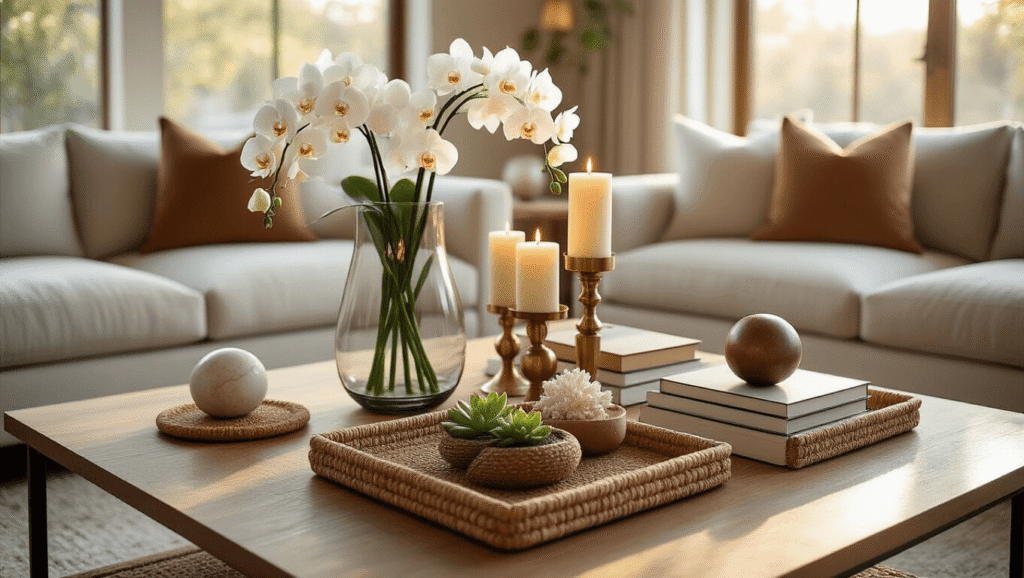
Think of your coffee table like a city skyline. You need tall buildings, medium ones, and some ground-level action.
Here’s what works every time:
- One tall element (12+ inches)
- One medium piece (6-8 inches)
- One short item (2-4 inches)
I learned this the hard way after placing three identical candles in a row and wondering why it looked like a sad funeral display. Stack books to create instant height for smaller items—it’s the easiest styling trick in the book.
Pro tip: Always group in odd numbers. Three is the magic number that feels natural to our eyes.
Texture Mixing: Where Magic Happens
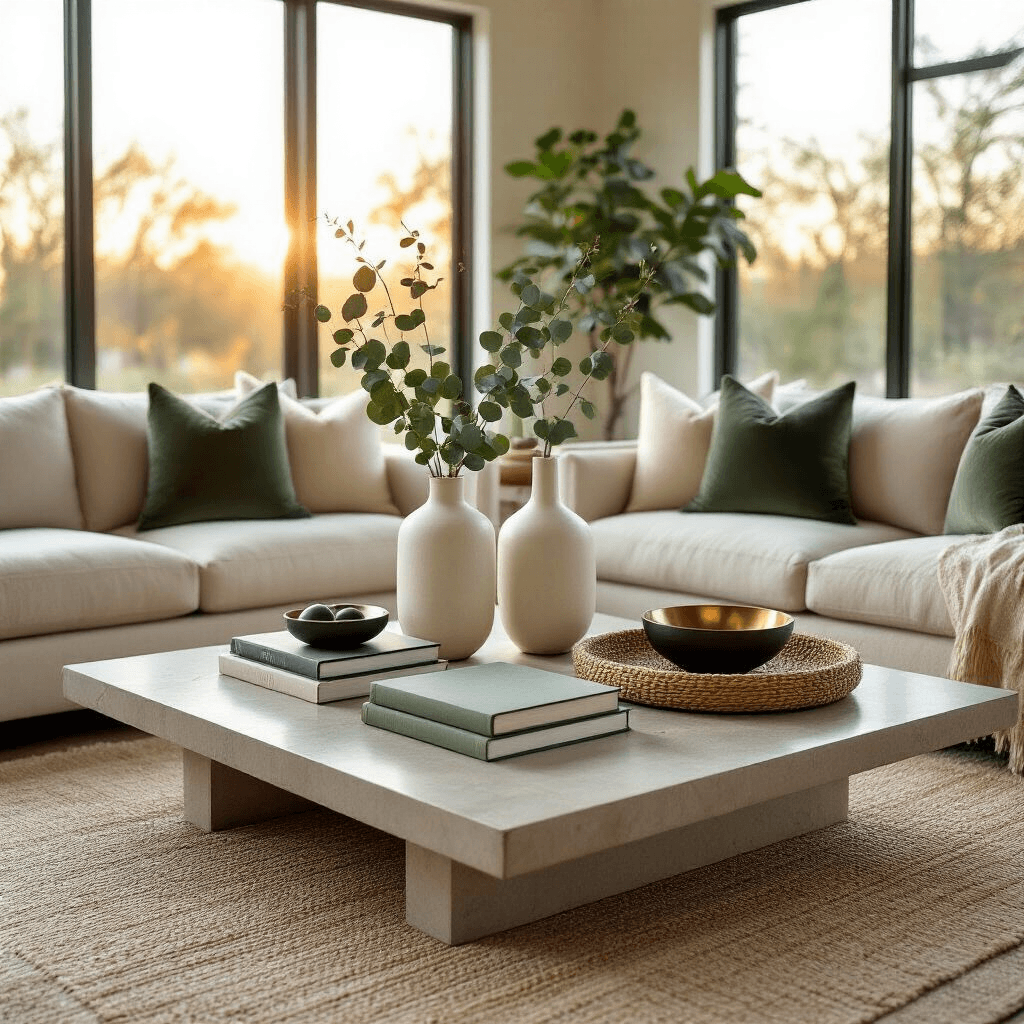
Your coffee table shouldn’t look like it came from one store catalog. Mix smooth glass with rough wood, shiny metals with matte ceramics.
Winning texture combinations:
- Glossy ceramic vases + rough jute coasters
- Smooth marble + bumpy coral pieces
- Metallic picture frames + soft fabric book covers
I once made the mistake of using all white ceramic pieces. It looked sterile enough to perform surgery on.
Create Intentional Groupings (Not Random Chaos)
Divide your table into 2-4 distinct sections depending on its size. Each section tells its own little story while contributing to the bigger picture.
Think of it like arranging separate conversations at a dinner party—each group works independently but creates one cohesive atmosphere.
Shape-Specific Strategies That Actually Work
Not all coffee tables are created equal. Here’s how to work with what you’ve got.
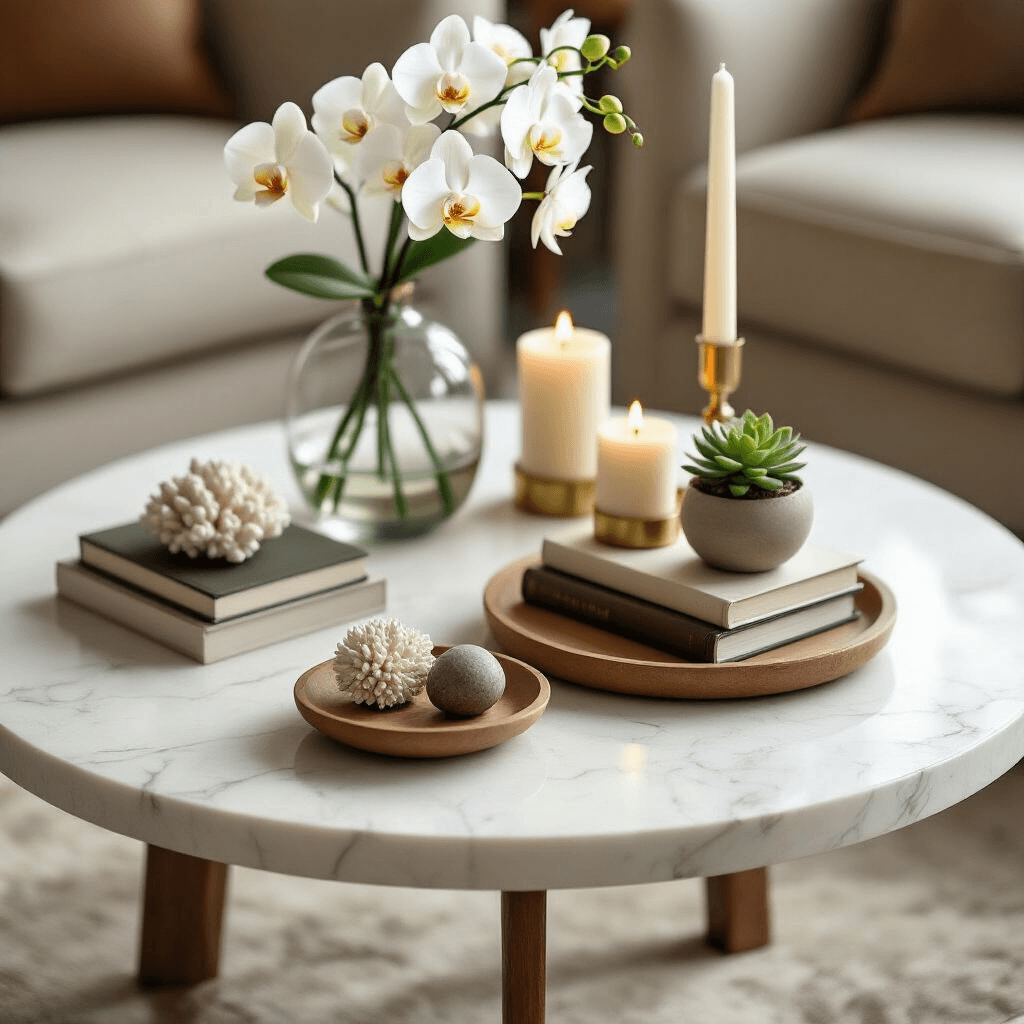
Round Tables: The Rule of Three Reigns Supreme
Round tables are forgiving but can look boring if you’re not careful.
My go-to formula:
- Position three main elements around the center
- Use round decorative trays instead of rectangular ones
- Keep one area completely clear for drinks and remote controls
I love placing a tall plant on one side, medium candles in the center, and a stack of books on the opposite side.
Square Tables: Think Triangle Formation
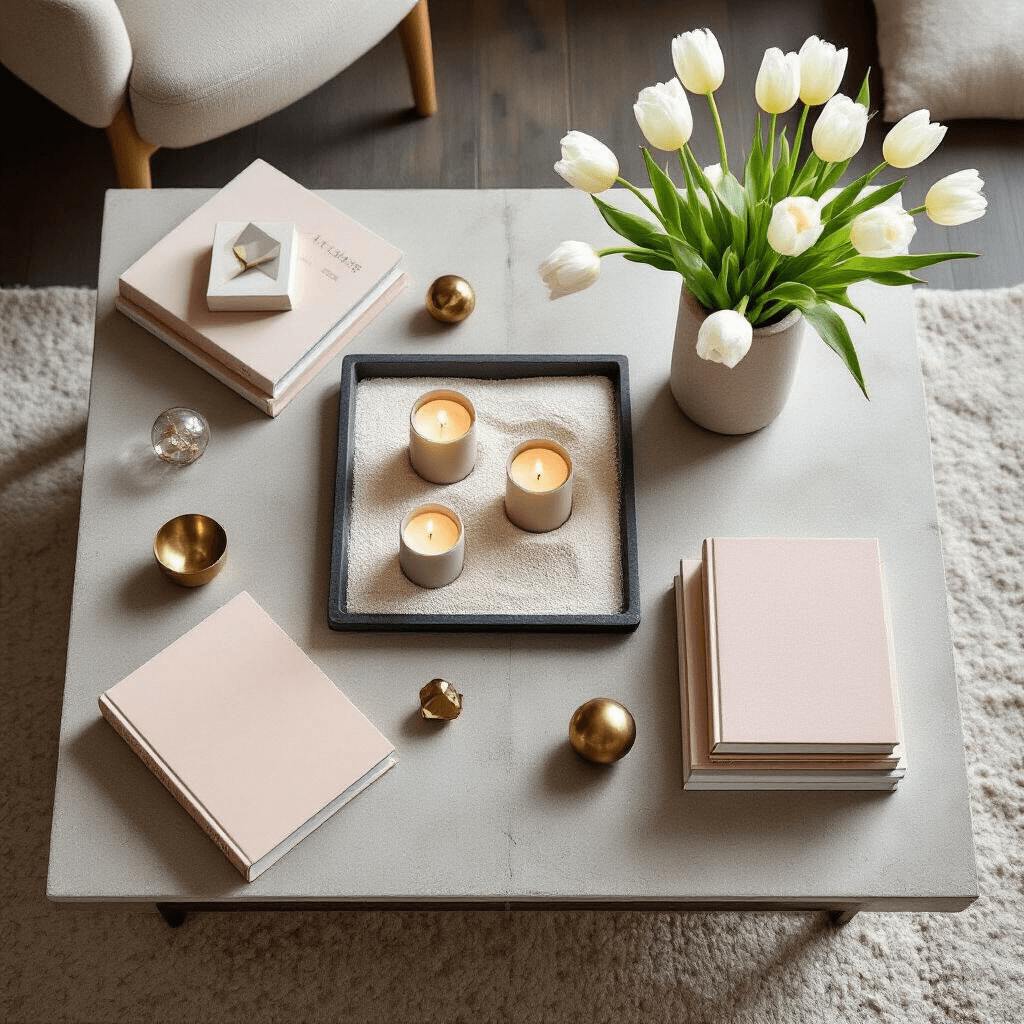
Square surfaces can handle more complex arrangements. Break the space into three distinct scenes arranged in a triangle pattern.
What works like magic:
- Large rectangular tray as your anchor piece
- Cluster small items (flowers, candles) nearby
- Leave one corner completely open
Rectangular Tables: The Three-Section Rule
Long tables need special treatment to avoid looking like a grocery store display.
Divide the length into three parts:
- Create one larger moment slightly off-center
- Add smaller vignettes on either side
- Resist the urge to fill every inch
Oval Tables: Classic Elegance Made Easy
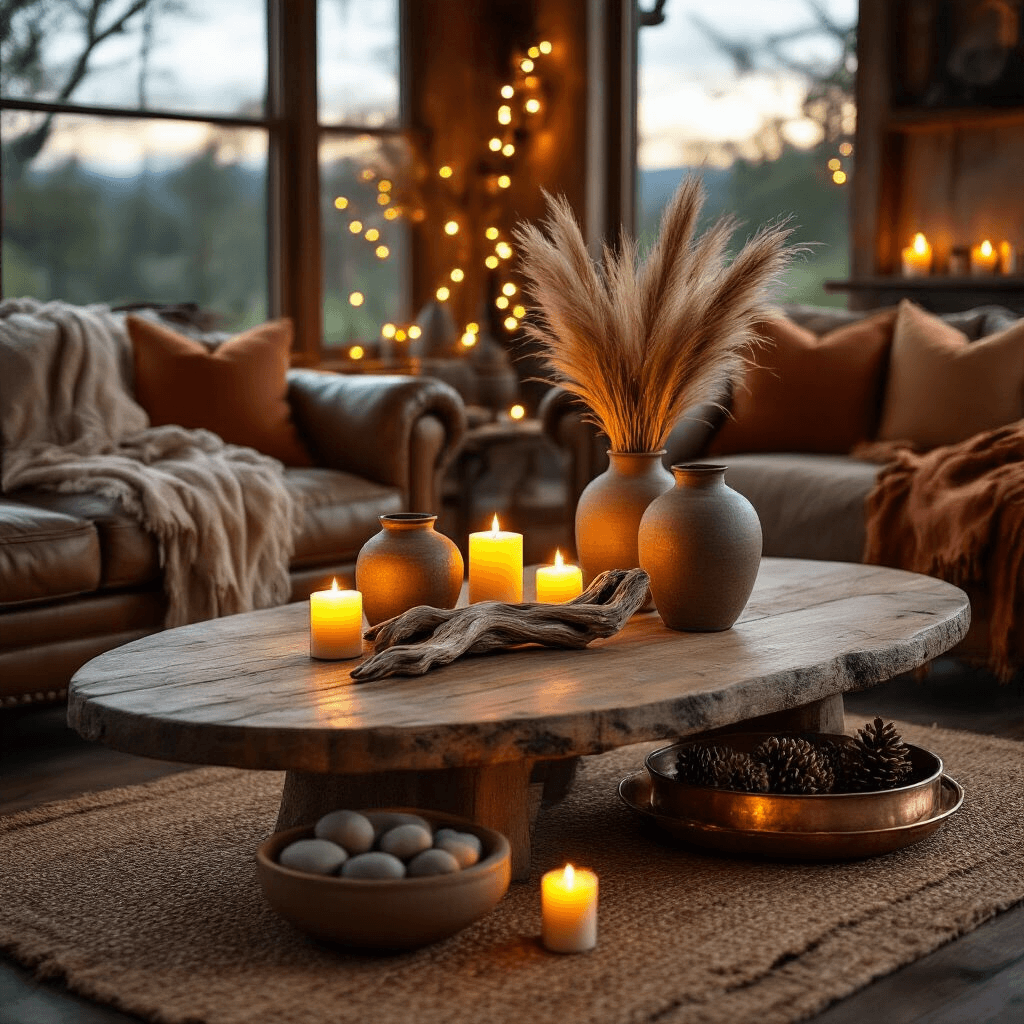
Oval tables give you two styling options:
Casual approach: Mirror the round table strategy with three height-varied elements in the center.
Formal approach: One central statement piece with two smaller matching moments on the sides.
The Secret Weapons Every Styling Pro Uses
Decorative Trays: Your Organization Superpower
Trays aren’t just functional—they’re styling goldmines. They create instant boundaries, define sections, and add another layer of visual interest.
I use woven natural trays for casual vibes and sleek metal ones for modern looks.
Natural Elements: Instant Life and Color
Nothing beats fresh flowers or greenery for making a space feel alive.
Easy wins:
- Single-variety flowers (less busy than mixed bouquets)
- Small succulents for low-maintenance green
- Branches or coral for sculptural interest
I keep it simple with one type of plant or flower. Too many varieties make the whole display feel chaotic.
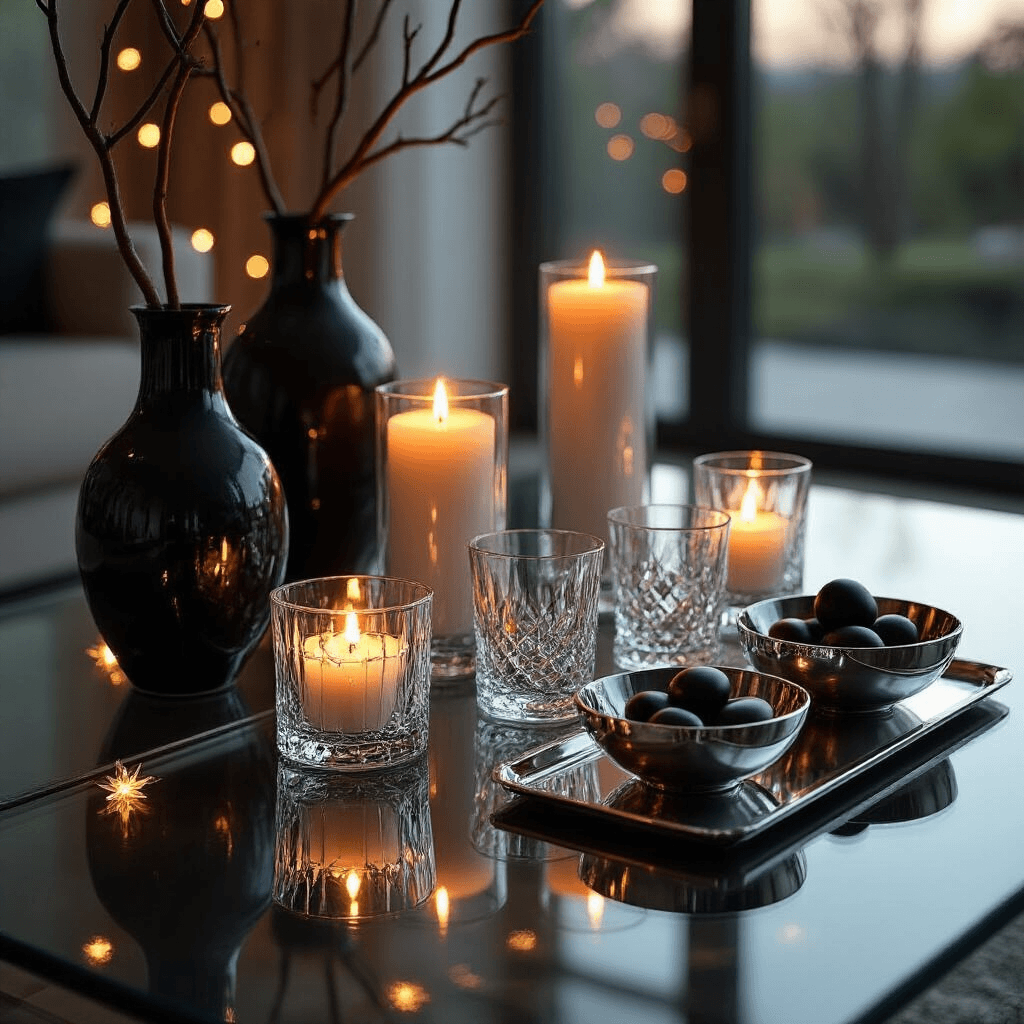
Sculptural Elements: The Conversation Starters
Add pieces that make people stop and look twice. Geometric shapes, interesting textures, unexpected silhouettes—anything that breaks the ordinary.
Avoid these common mistakes:
- Too many round objects (boring!)
- Everything the same color
- Pieces that serve no visual purpose
Real-Life Styling Scenarios That Work
Let me share what’s currently on my own coffee table:
- A stack of three coffee table books (creating height)
- A small brass bowl with keys and loose change (functional beauty)
- A single white orchid in a simple ceramic pot (natural element)
- A textured ceramic sphere (sculptural interest)
It took me fifteen minutes to arrange, but it looks like I hired a professional stylist.
The Cohesion Factor: Making Everything Play Nice Together
Your coffee table shouldn’t exist in isolation. Pull colors from your throw pillows, artwork, and
This post may contain affiliate links. Please see my disclosure policy for details.