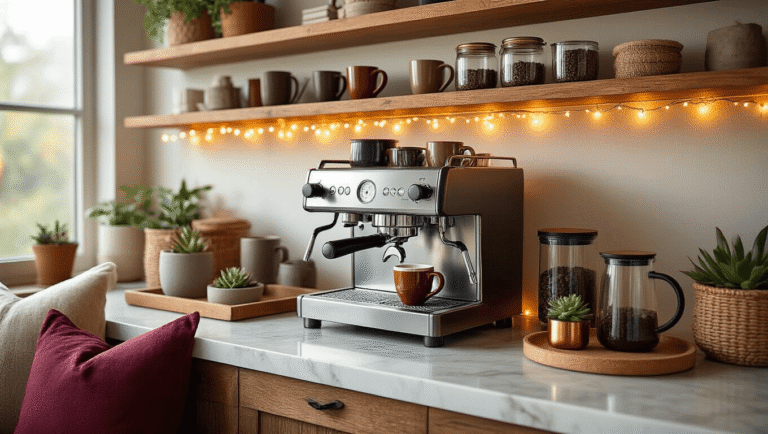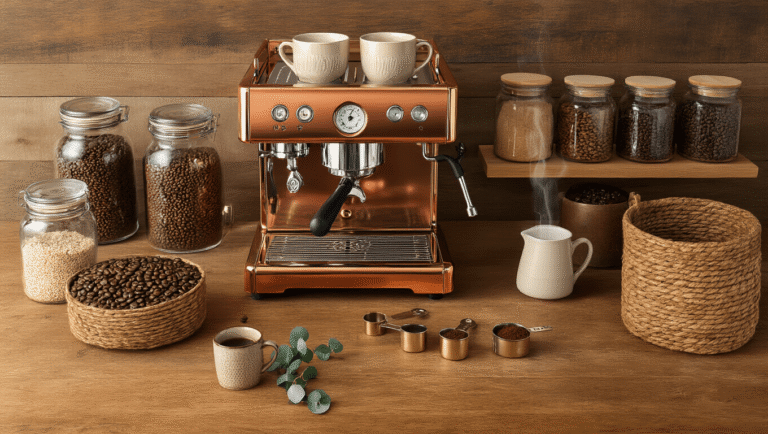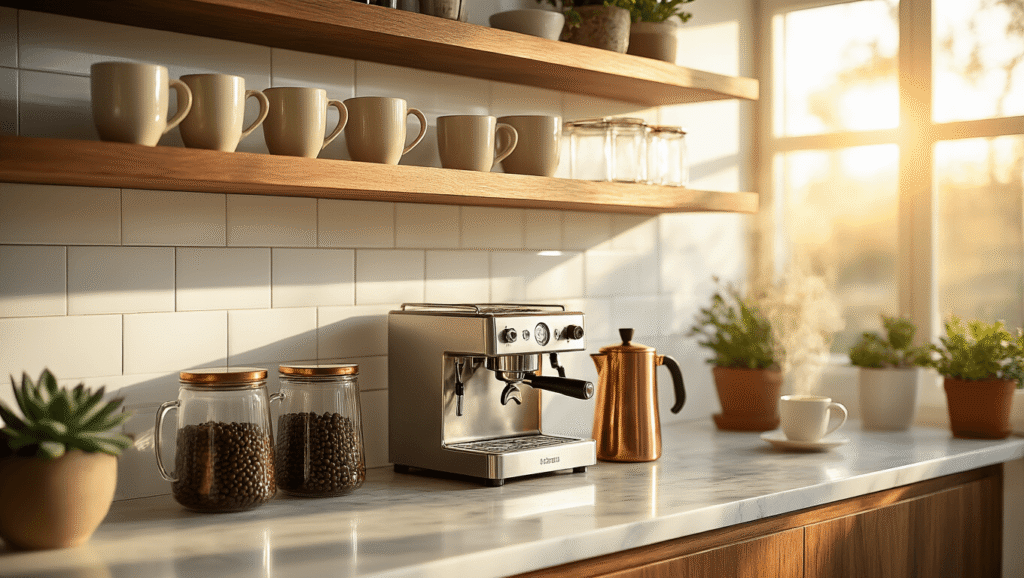
Transform Your Kitchen into a Coffee Lover’s Paradise with Floating Shelves
Contents
- Transform Your Kitchen into a Coffee Lover’s Paradise with Floating Shelves
- Size Matters (And So Does Math)
- Weight Capacity That Won’t Let You Down
- Finding Those Sneaky Wall Studs
- The Hidden Bracket Magic
- Modern Minimalist: Clean Lines, Maximum Impact
- Farmhouse Charm: Warm Woods and Cozy Vibes
- Stain and Seal: My Go-To Formula
- Custom Paint: When Wood Isn’t Your Thing
Have you been staring at that awkward corner in your kitchen, wondering how to make it both beautiful and useful?
I get it completely.
You want that Instagram-worthy coffee bar with floating shelves everyone’s raving about, but you’re not sure where to start or if your walls can handle the weight.
Let me walk you through everything I’ve learned about creating the perfect coffee station that’ll make your morning routine feel like a ritual instead of a chore.
Why I Fell Head-Over-Heels for Floating Coffee Shelves
Three years ago, my kitchen looked like a coffee shop exploded in it.
Coffee makers cluttered my counters, mugs lived in random cabinets, and finding my favorite brewing supplies felt like a treasure hunt every morning.
Then I discovered floating shelves.
Game changer doesn’t even begin to cover it.
These shelves gave me:
- Clean lines that make my kitchen look twice as big
- Easy access to everything I need for my morning brew
- Display space for my collection of vintage mugs
- Storage that doesn’t scream “storage”
The Nitty-Gritty: What Makes These Shelves Actually Work
Before you get swept away by Pinterest dreams, let’s talk reality.
Floating shelves for coffee bars aren’t your average wall décor.
Here’s what separates the good from the “whoops-there-goes-my-expensive-espresso-machine”:
Size Matters (And So Does Math)
Most quality floating shelves come 3 inches thick – thick enough to look substantial but not chunky.
For depth, you’ve got options:
- 6 inches: Perfect for mugs and small accessories
- 8-10 inches: Sweet spot for most coffee equipment
- 12 inches: Go-big territory for serious coffee setups
Length ranges from 12 to 90 inches, but I’ve found the magic number sits around 36-48 inches for most home coffee bars.
Weight Capacity That Won’t Let You Down
This part keeps me up at night when I see people just screwing shelves into drywall.
Properly installed floating shelves hold up to 50 pounds per mounting stud.
That means your espresso machine won’t end up as expensive floor art.
Installation: The Make-or-Break Moment
I’ll be honest – I messed up my first installation spectacularly.
Measured twice, drilled once, and still ended up with a crooked shelf that haunted me every morning.
Here’s what I wish someone had told me:
Finding Those Sneaky Wall Studs
Forget the knock-and-hope method.
Get yourself a decent stud finder – it’s worth every penny.
Mark your studs with a pencil (not a Sharpie, trust me on this one).
The Hidden Bracket Magic
The beauty of floating shelves lies in their invisible support system.
These aren’t your grandmother’s shelf brackets.
Hidden brackets slide into the back of the shelf, creating that clean, floating appearance that makes your coffee bar look professionally designed.
The process goes like this:
- Brackets mount directly to studs with heavy-duty screws
- Shelf slides onto brackets like a glove
- Hidden trim screws lock everything in place
- Marvel at your handiwork
Most quality shelf sets come with everything you need – printed instructions, hardware, even drill bits.
Design Styles That Actually Work (Not Just Look Pretty)
I’ve seen floating coffee bars in every style imaginable, but two consistently knock it out of the park.
Modern Minimalist: Clean Lines, Maximum Impact
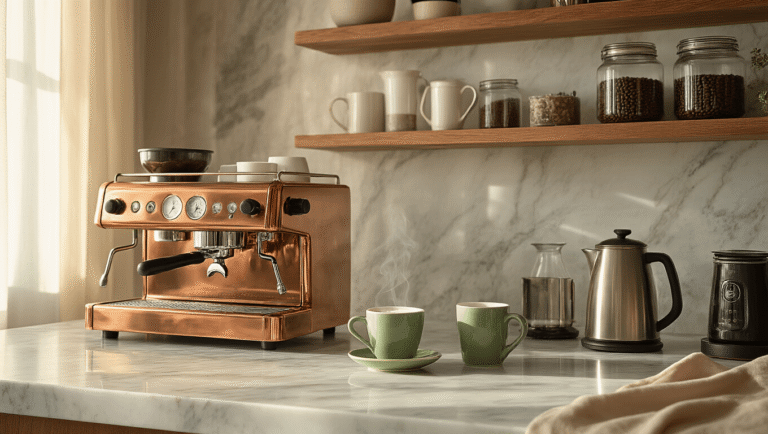
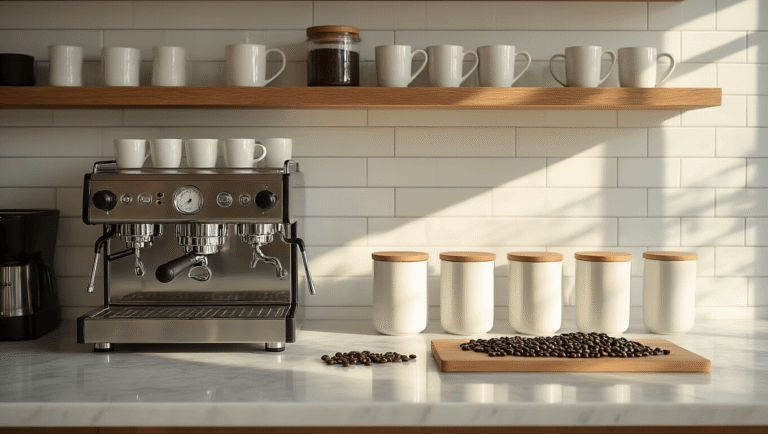
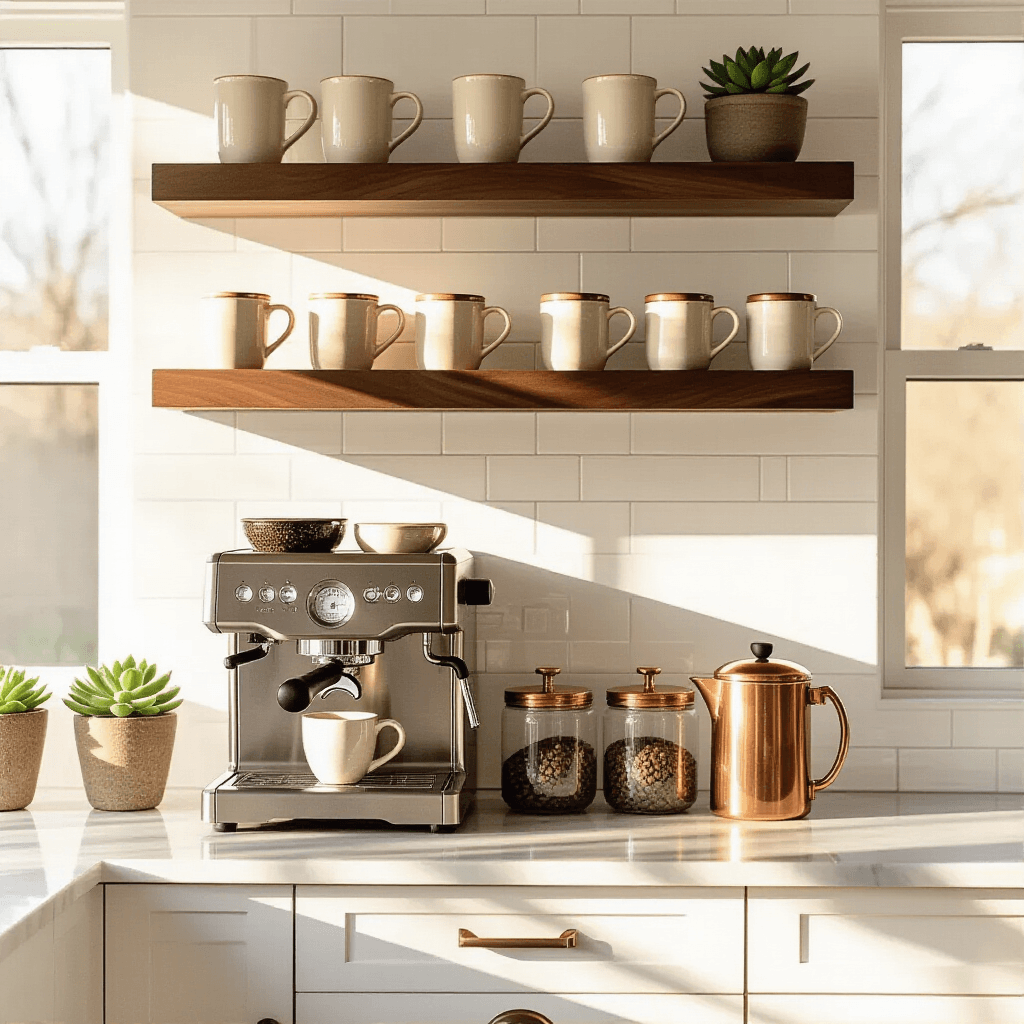
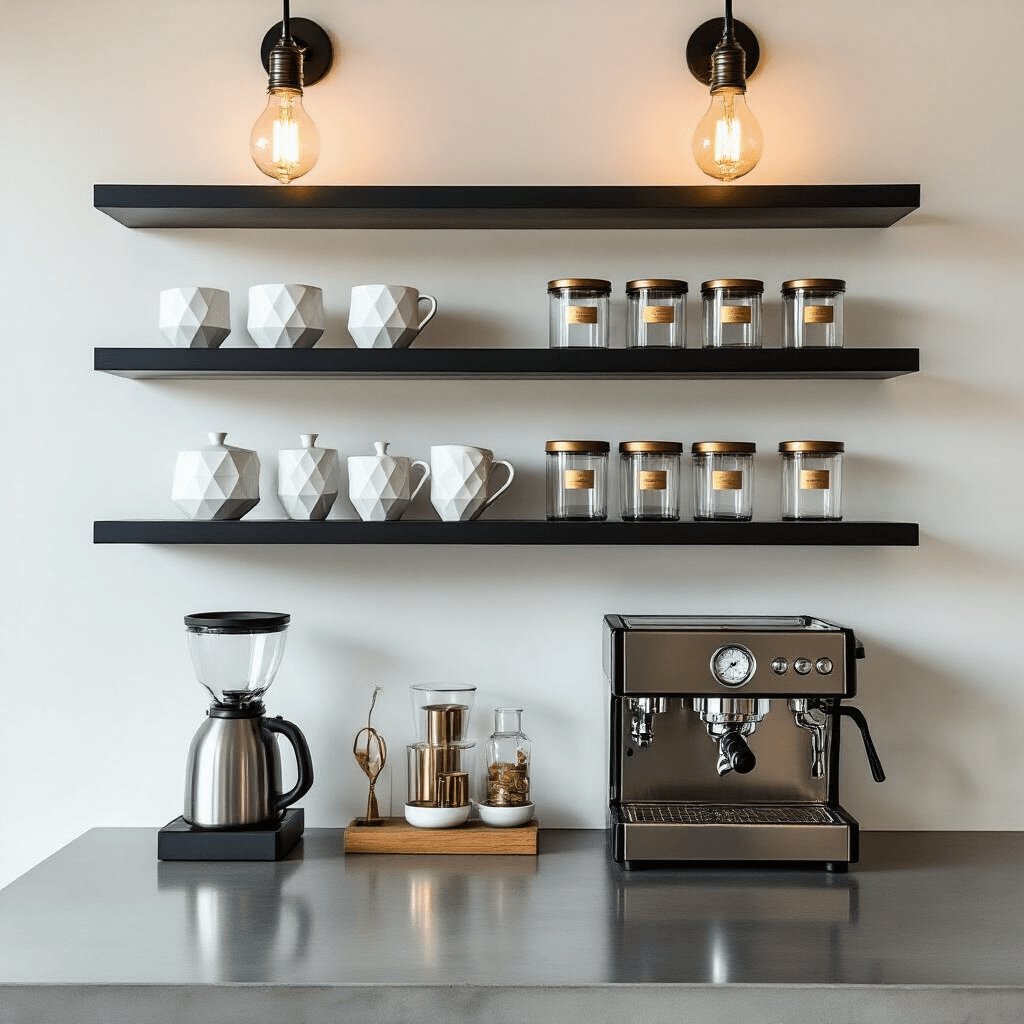
Picture this: sleek walnut shelves against white walls, stainless steel coffee equipment, and nothing that doesn’t earn its keep.
This style works because:
- Every item has purpose
- Colors stay neutral (blacks, whites, woods)
- Shapes are geometric and clean
Farmhouse Charm: Warm Woods and Cozy Vibes
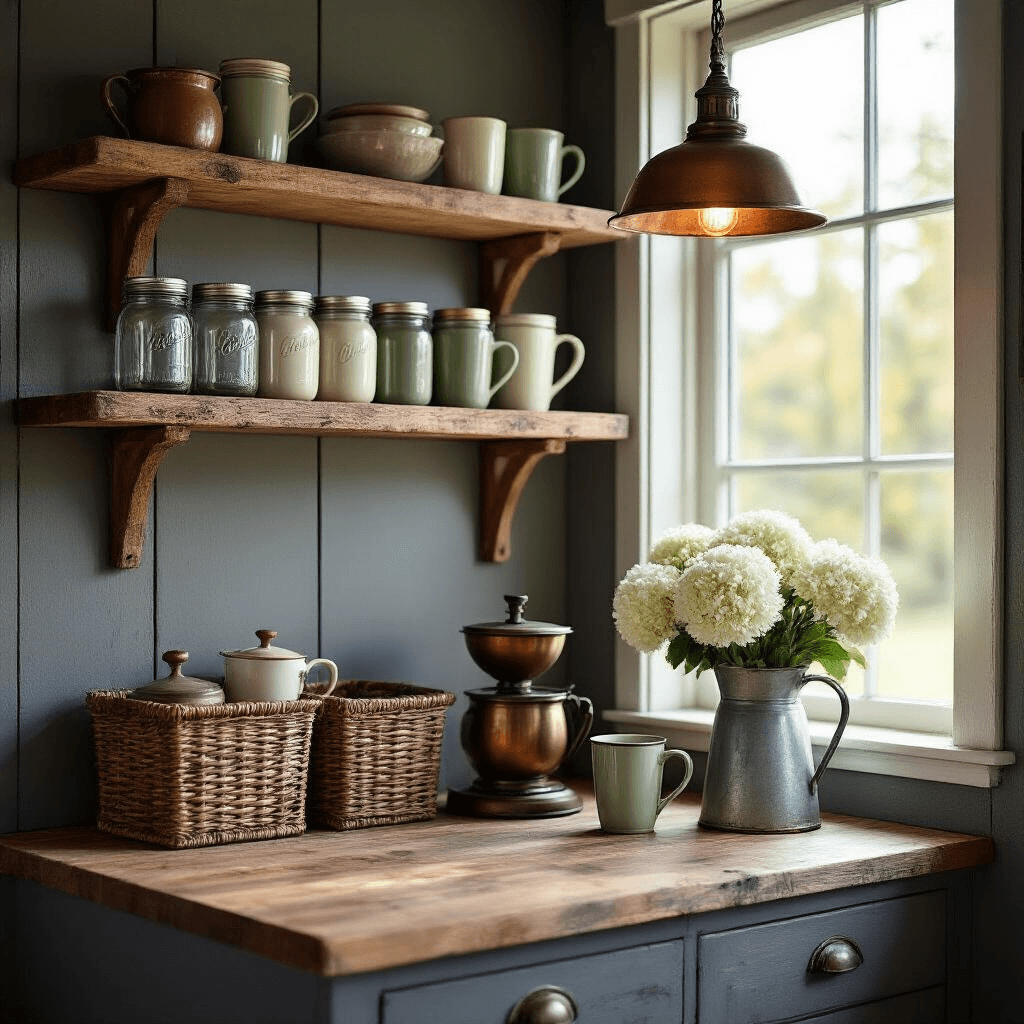
Think reclaimed wood shelves with mason jar storage, vintage coffee signs, and that lived-in feeling that makes guests want to linger.
Key elements:
- Natural wood finishes with visible grain
- Mix of textures (wood, metal, ceramic)
- Warm lighting that makes everything glow
Finishing Touches That Make or Break the Look
The difference between “nice try” and “wow, who designed this?” often comes down to the finish.
Stain and Seal: My Go-To Formula
After trying everything from glossy polyurethane (too shiny) to leaving wood raw (coffee stains everywhere), I’ve settled on matte finish Polycrylic.
It protects without looking plastic.
Your shelves keep that natural wood feel while laughing off coffee spills and steam damage.
Custom Paint: When Wood Isn’t Your Thing
Sometimes your kitchen demands something different.
Popular painted finishes:
- Pure white: Classic, clean, goes with everything
- Soft gray: Modern without being cold
- Warm beige: Bridges traditional and contemporary
- Matte black: Bold choice that makes coffee equipment pop
This post may contain affiliate links. Please see my disclosure policy for details.