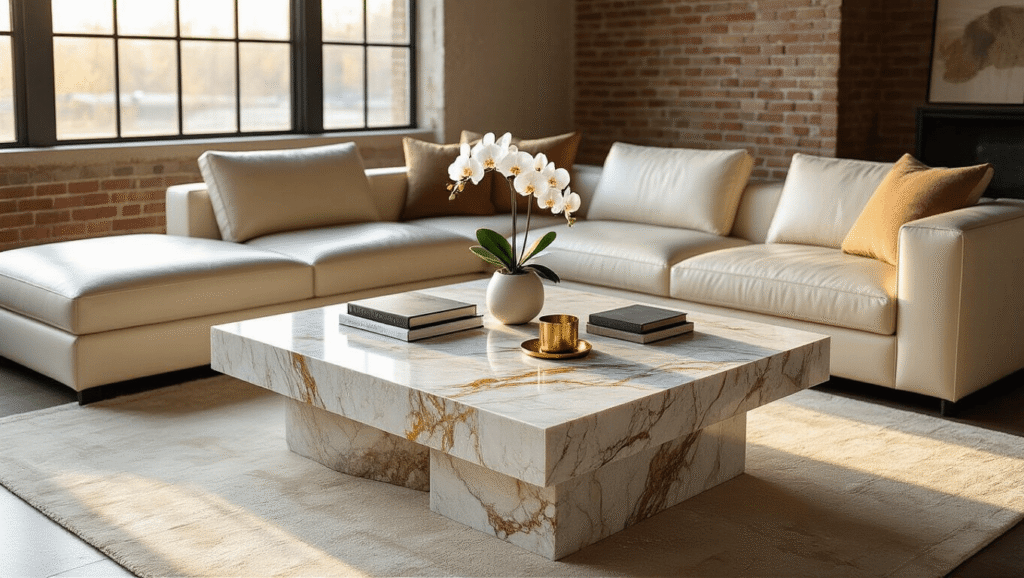
Why Stone Coffee Tables Are Worth The Investment
Contents
Let me get straight to it.
Stone isn’t cheap, and it’s definitely not light.
But when you place a marble coffee table in your living room, you’re not just buying furniture—you’re anchoring your entire space with something that’ll outlast your sofa, your rug, and probably your lease.
Here’s what stone brings to the table (pun intended):
- Natural beauty that literally took millions of years to create
- Unique patterns and veining that mean no two tables are identical
- Durability that laughs in the face of daily wear
- Temperature resistance that makes it ideal for hot and cold beverages
- Timeless appeal that won’t look dated in five years
I once had a client who spilled an entire glass of red wine on her travertine coffee table.
She panicked, obviously.
But because we’d sealed it properly and she blotted (didn’t wipe) immediately, there wasn’t even a hint of staining.
That’s the resilience we’re talking about.
The Stone Lineup: Know Your Materials
Not all stone is created equal, and frankly, some types are way more high-maintenance than others.
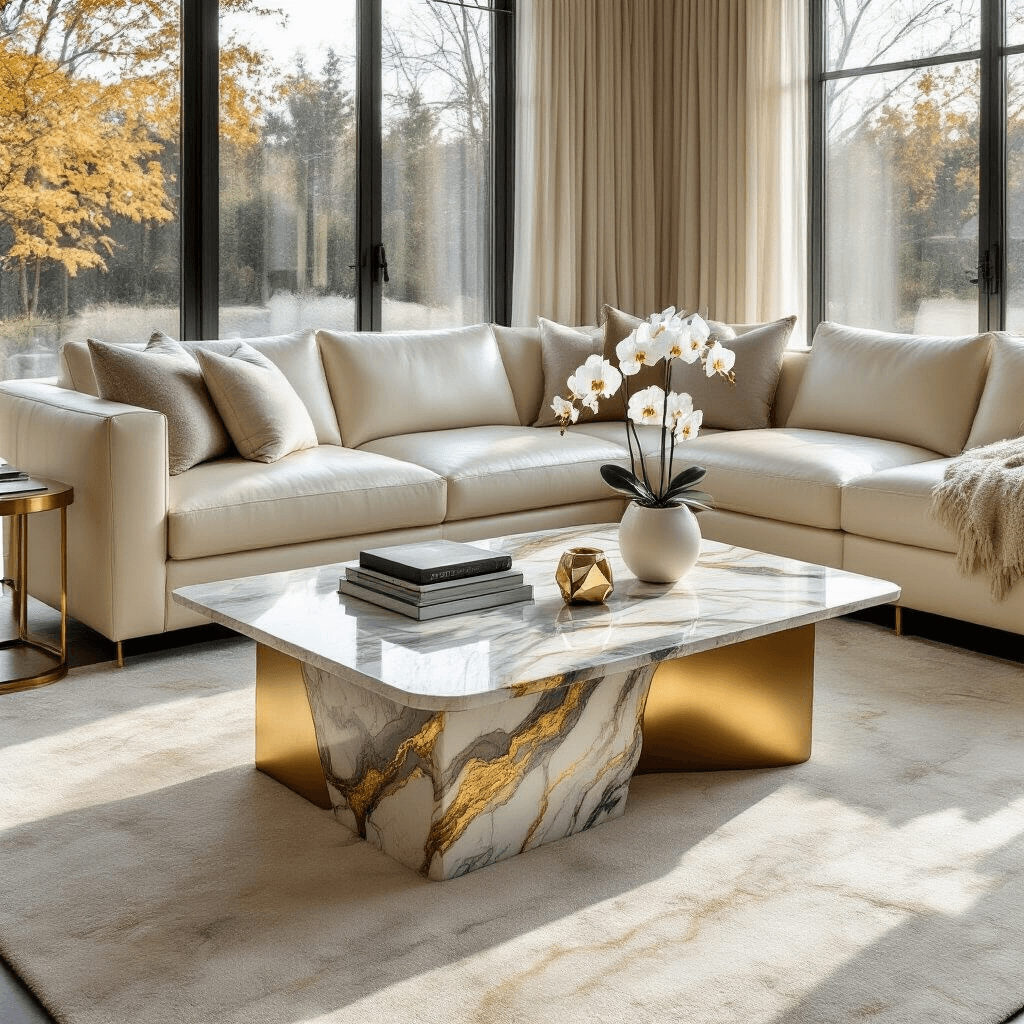
Marble: The Diva of Stone Tables
Marble is gorgeous.
There’s no denying that.
Those sweeping veins of grey, gold, or even pink against a white background create visual drama that’s hard to beat.
But marble is porous and reactive to acids.
That morning coffee? The lemon water you’re drinking for health? Both can etch the surface if you’re not using coasters religiously.
Marble works best for you if:
- You’re committed to maintenance
- You embrace the patina that develops over time
- You want that classic, luxurious aesthetic
- You’re willing to invest in proper sealing
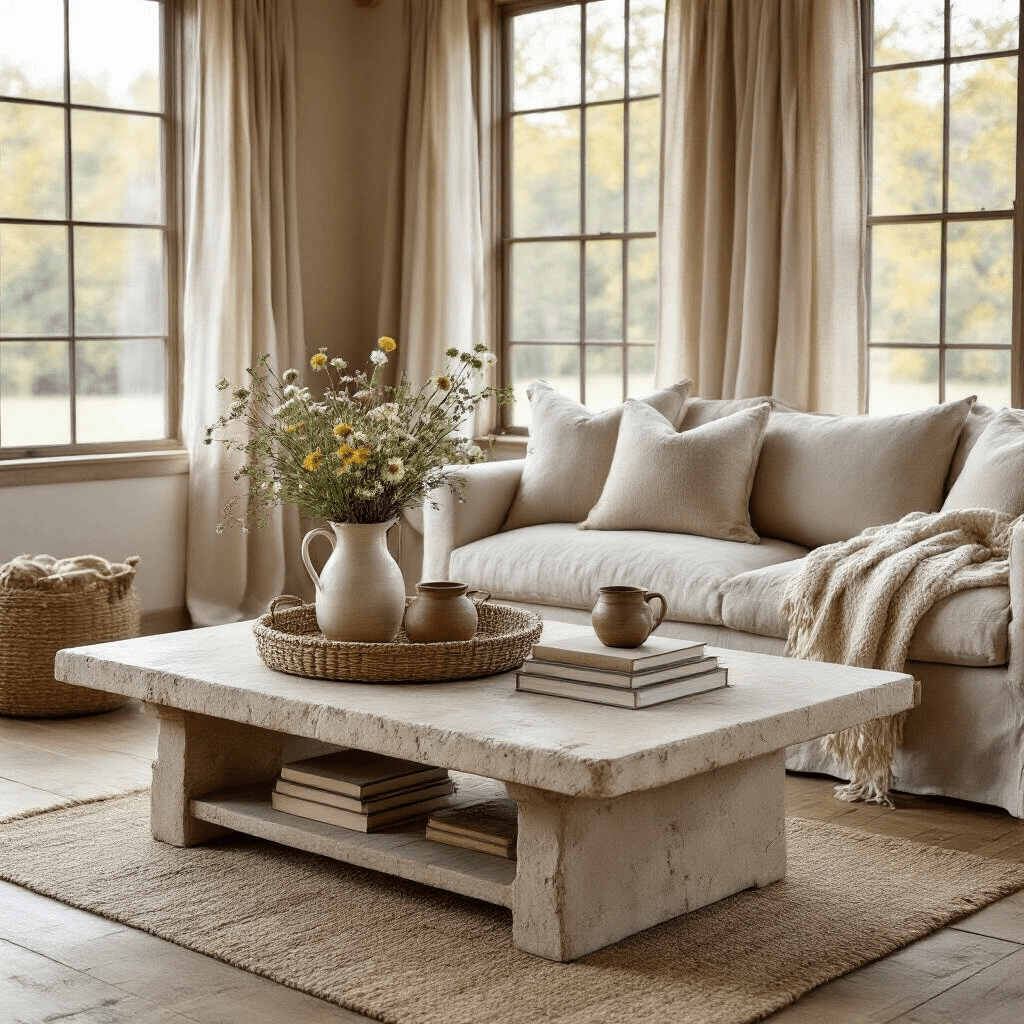
Travertine: The Rustic Alternative
Travertine has a more textured, earthy appearance than marble.
It’s slightly less formal, which makes it perfect for spaces that need to feel lived-in rather than museum-like.
The natural pits and grooves in travertine tell a story, but they also trap dirt if you’re not diligent about cleaning.
I love travertine for family rooms where perfection isn’t the goal.
Granite: The Tough Guy
If marble is the diva and travertine is the bohemian, granite is the linebacker.
This stone is dense, durable, and significantly less porous than its cousins.
It resists staining better and handles heat like a champion.
The aesthetic is less refined—granite tends to have a busier, speckled appearance—but for high-traffic homes with kids and pets, it’s a practical winner.
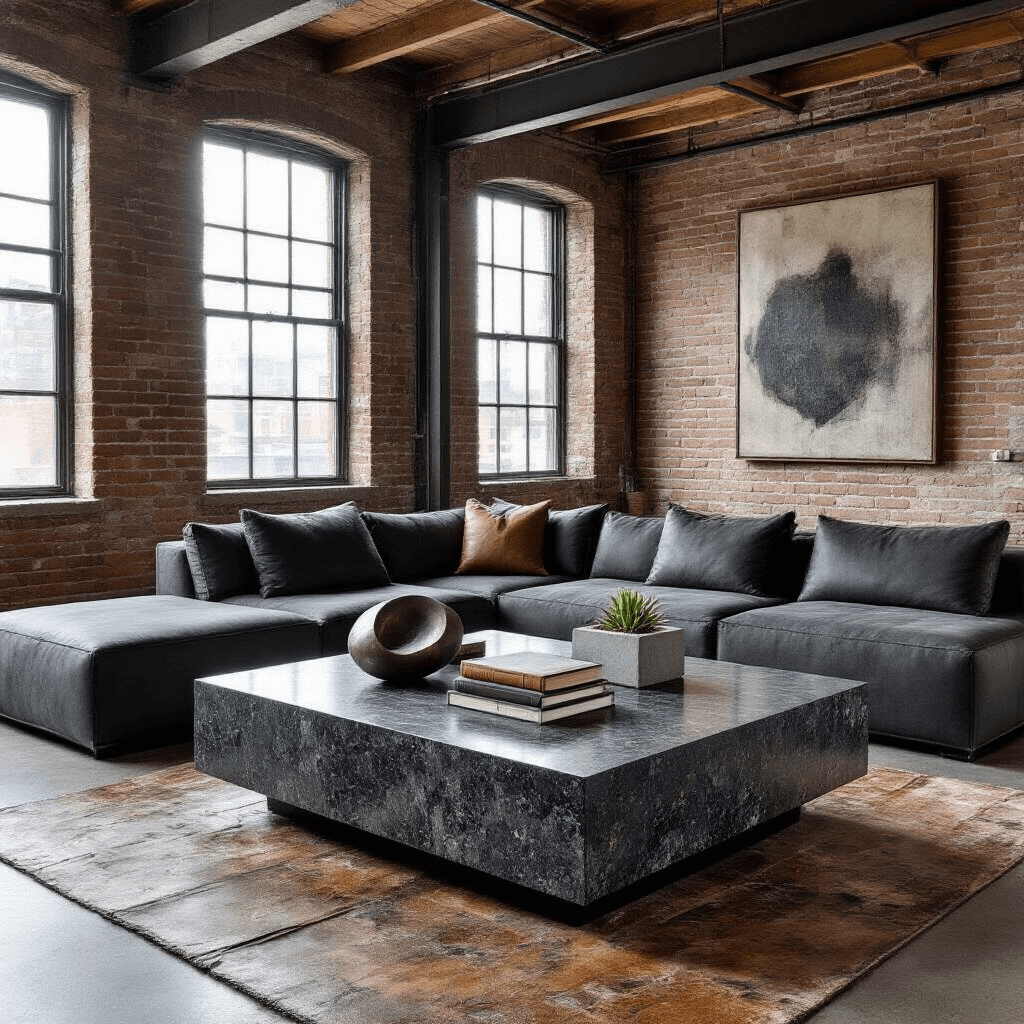
Slate: The Dark Horse
Slate brings moody, sophisticated vibes with its darker tones and fine-grained texture.
It’s less common for coffee tables, which makes it perfect if you want something distinctive.
Slate is relatively low-maintenance but can chip or flake if struck hard enough.
Pair a slate coffee table with industrial or modern farmhouse interiors for maximum impact.
Shape Matters More Than You Think
I can’t tell you how many times I’ve seen people buy a gorgeous stone table that’s completely wrong for their space.
Shape isn’t just aesthetic—it’s functional.
Round Tables: The Social Butterfly
Round stone tables create better flow in smaller spaces.
There are no sharp corners to navigate around, which is crucial if you’ve got toddlers doing laps around your furniture.
The circular shape also encourages conversation—everyone’s equidistant from the center.
I always recommend round tables for:
- Apartments and compact living rooms
- Homes with young children
- Spaces where traffic flows around (not past) the table
- Rooms that need to feel softer and more organic
Rectangular Tables: The Classic Workhorse
This is your traditional coffee table shape, and there’s a reason it’s so common.
Rectangular stone top coffee tables provide maximum surface area for books, trays, remotes, and that pile of magazines you swear you’ll read.
They work brilliantly in front of sofas and sectionals, creating a visual parallel that feels balanced.
Choose rectangular when:
- Your sofa is also rectangular (obviously)
- You need serious surface space
- Your room is more traditional in layout
- You want to create distinct zones in an open floor plan
Square Tables: The Modern Minimalist
Square tables feel contemporary and intentional.
They work particularly well with modular or L-shaped seating arrangements.
The symmetry is visually satisfying, but you do sacrifice some surface area compared to rectangular options.
Square makes sense if:
- You’re working with a truly square seating area
- Your aesthetic leans modern or contemporary
- You don’t need tons of display surface
- You value visual balance over function
The Maintenance Reality Check
Let’s talk about what nobody mentions in those beautiful Instagram photos.
Stone requires maintenance.
Not obsessive, pull-your-hair-out maintenance, but consistent attention.
Daily Habits That’ll Save Your Table
Coasters are non-negotiable.
I don’t care how beautiful your table is—water rings and acid etching will happen without protection.
Keep decorative coasters within arm’s reach so actually using them becomes effortless.
Blot, never wipe.
When something spills (and it will), your instinct is to wipe it up.
Resist.
Blotting lifts the liquid without spreading it into the porous stone or pushing it into natural fissures.
Dust with soft materials only.
Paper towels are too abrasive.
Use microfiber cloths or soft cotton to dust your table daily.
This prevents the buildup of grit that can scratch the surface over time.
Weekly Deep Cleaning
Once a week, give your stone table some proper attention.
Mix a pH-neutral stone cleaner with warm water (never use
This post may contain affiliate links. Please see my disclosure policy for details.