Why Your Living Room Needs a Mid-Century Modern Coffee Table (And How to Choose One That Actually Works)
Contents
- Why Your Living Room Needs a Mid-Century Modern Coffee Table (And How to Choose One That Actually Works)
- What Makes a Coffee Table “Mid-Century Modern”?
- Materials That Make or Break the Look
- Shape Psychology: Why Form Follows Function Actually Matters
- The Storage Game-Changer
- Size Matters: Getting the Proportions Right
- Styling Your Mid-Century Modern Coffee Table
- Budget-Smart Shopping Strategies
Mid-century modern coffee tables have taken over Instagram feeds and Pinterest boards for good reason. I’ve been obsessing over these beauties for years, and let me tell you – they’re not just another design trend that’ll look dated in five years.
You’re probably wondering if that sleek, wooden table with those signature tapered legs is worth the investment. Or maybe you’re staring at your current coffee table thinking it looks like something from a hotel lobby circa 1995. I get it.
What Makes a Coffee Table “Mid-Century Modern”?
Picture this: It’s 1955, and designers are rebelling against stuffy Victorian furniture. They want clean lines, honest materials, and pieces that don’t scream “look at me” from across the room.
Key characteristics that define the style:
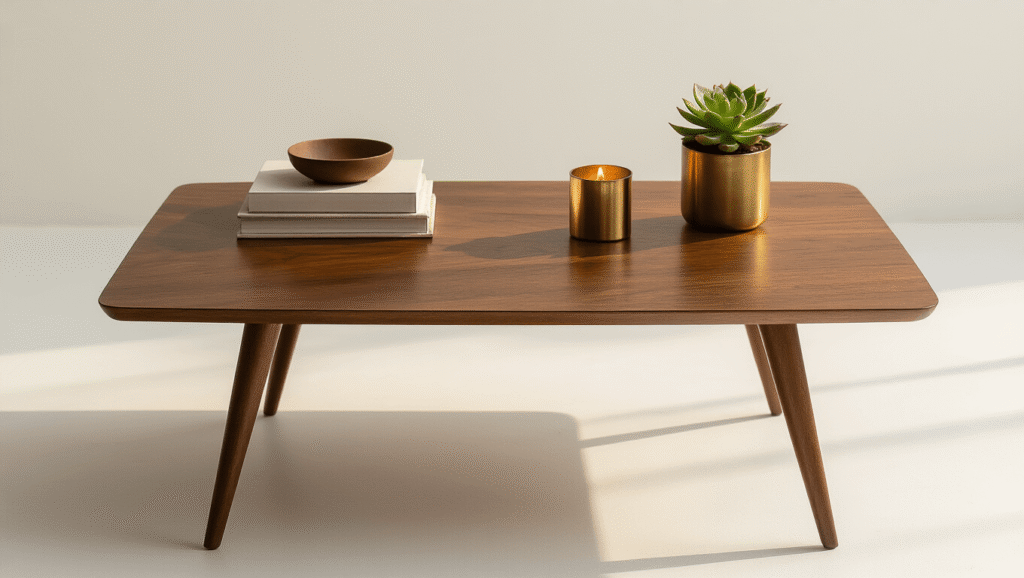
- Tapered or splayed legs that make the table appear to float
- Simple geometric shapes – rectangles, ovals, or those iconic kidney-bean forms
- Natural wood grains doing all the decorative heavy lifting
- Low profile that doesn’t block conversation across the room
- Functional storage built right into the design
I fell in love with my first mid-century piece at a garage sale fifteen years ago. The seller had no idea what she was parting with for $25. That little walnut table with its hairpin legs taught me everything about why this style works so brilliantly.
Materials That Make or Break the Look
Wood: The Star of the Show
Walnut and teak reign supreme in authentic mid-century design. These aren’t just pretty faces – they’re workhorses with grain patterns that could make a minimalist weep with joy.
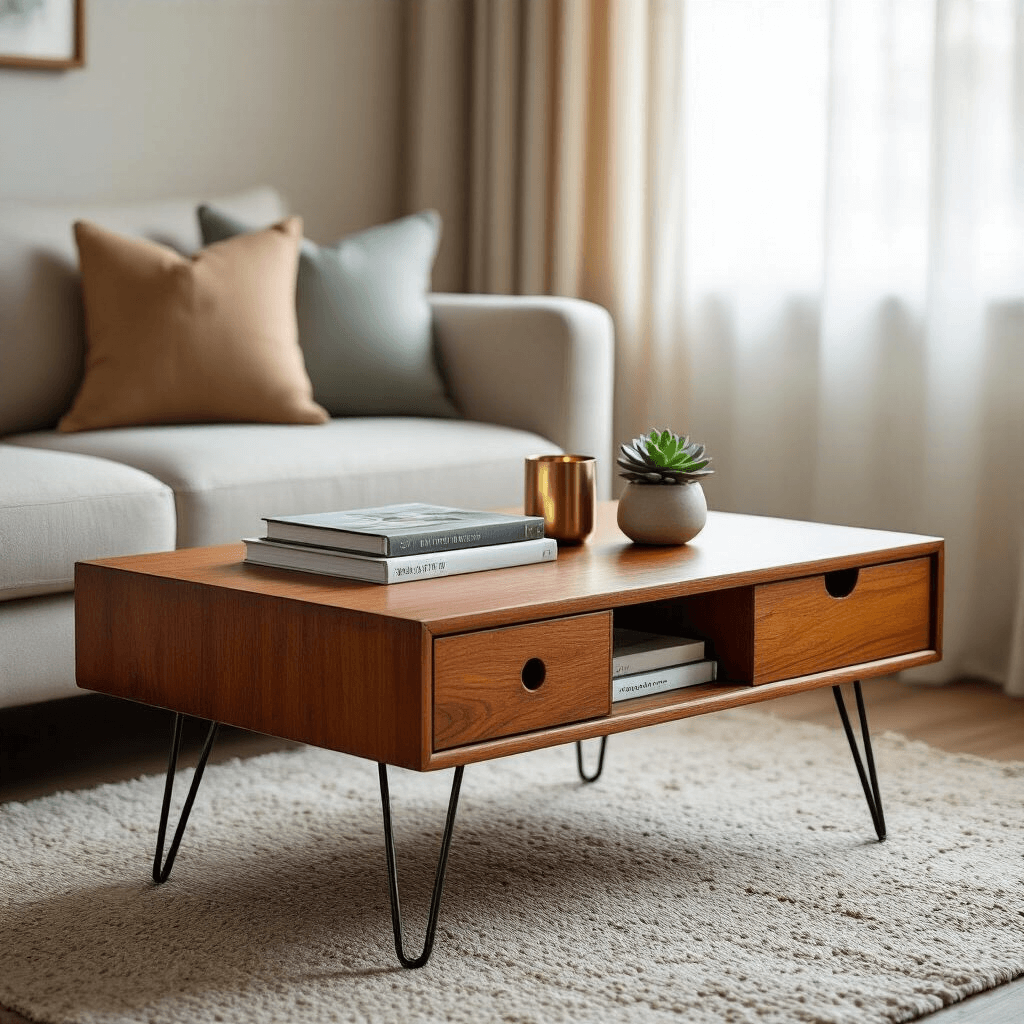
I remember running my hands across a genuine teak table at a vintage shop in Portland. The wood felt substantial, warm, almost alive. That’s what you’re looking for.
What to look for in wood tables:
- Rich, chocolate-brown walnut with flowing grain
- Teak with its distinctive golden honey tones
- Rosewood for those special splurge moments
- Avoid anything that looks too perfect or plastic-y
Glass and Metal: The Supporting Cast
Smart designers pair wood with glass tabletops to create visual lightness. The glass disappears, letting your beautiful rug shine through while keeping the focus on those gorgeous wooden legs.
Metal accents work best in:
- Matte black steel for industrial edge
- Warm brass for sophisticated glamour
- Hairpin legs for that authentic 1950s vibe
Shape Psychology: Why Form Follows Function Actually Matters
Rectangular Tables: The Workhorses
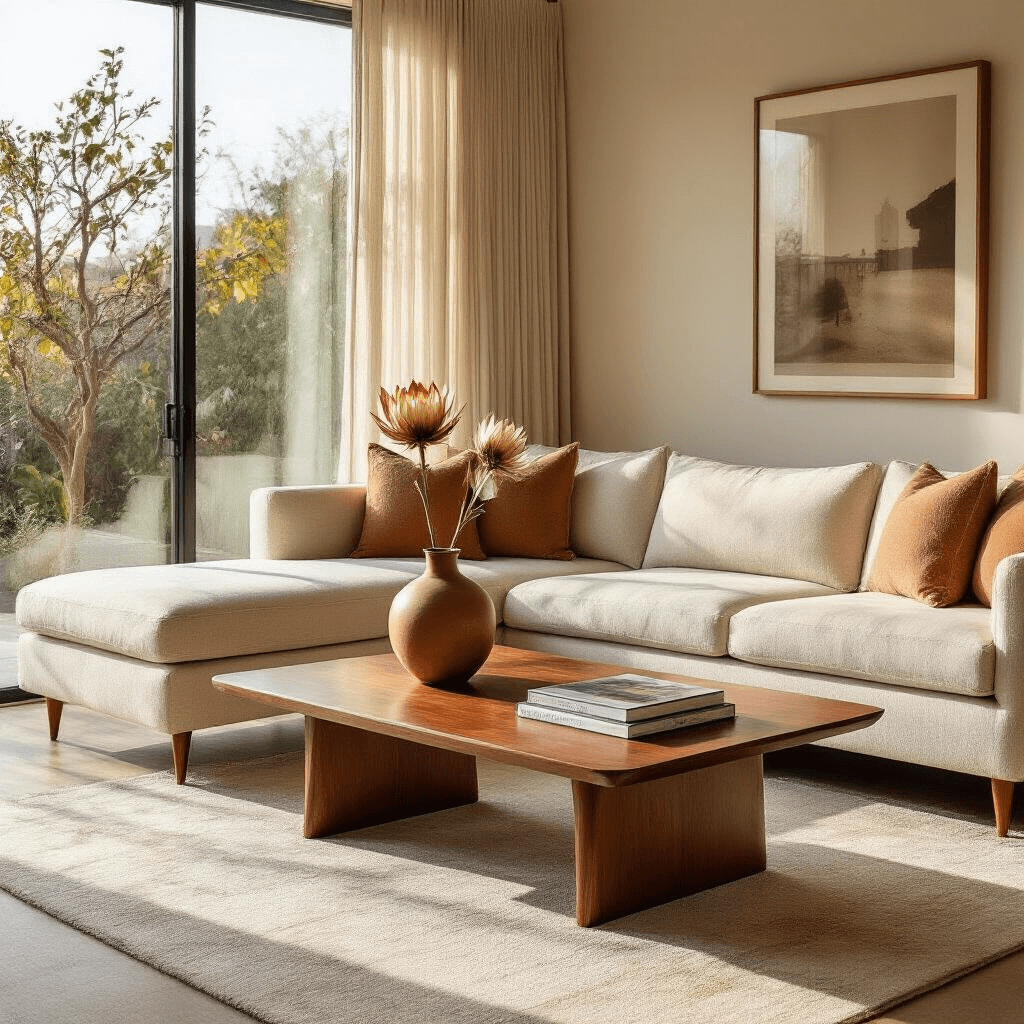
Most living rooms need the reliability of a rectangular mid-century coffee table. They’re practical, they fit against sectionals beautifully, and they don’t fight your sofa for attention.
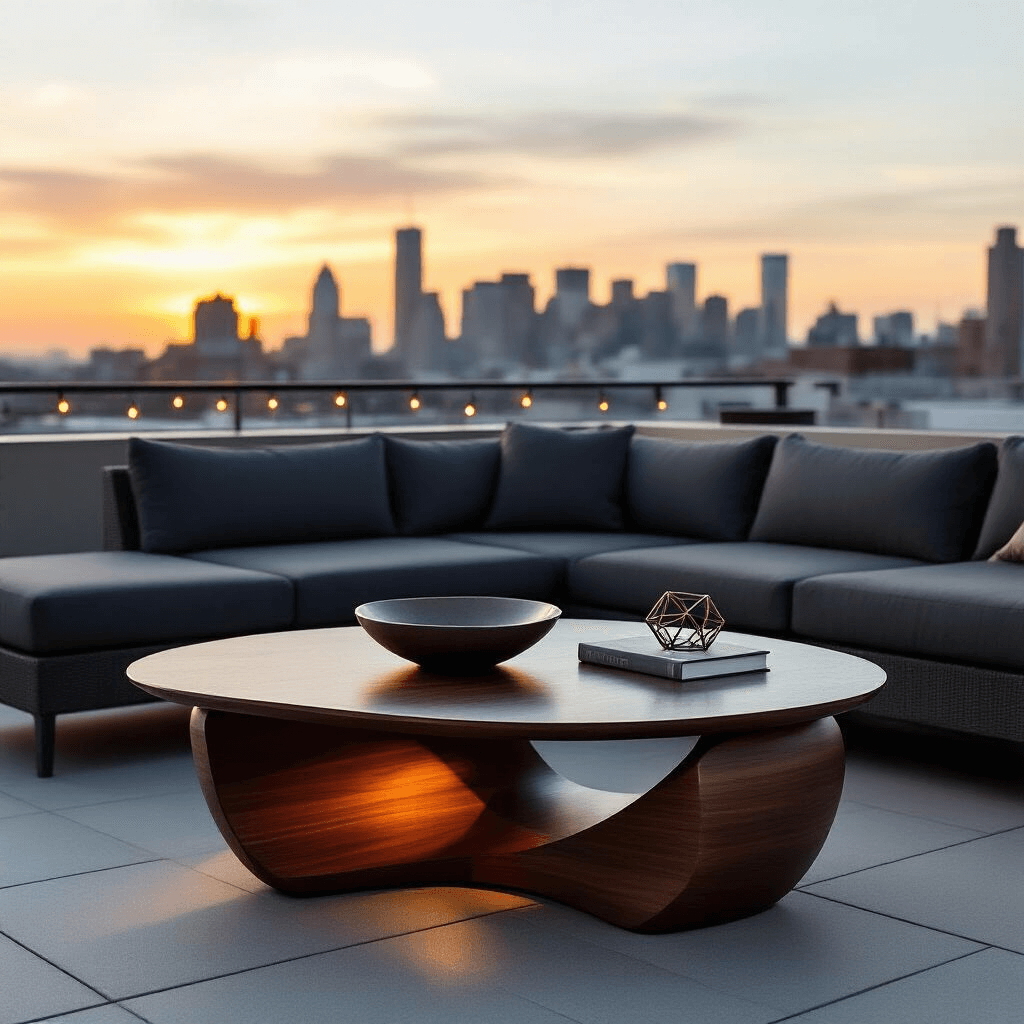
I’ve had my rectangular walnut table for eight years now. It’s survived wine spills, laptop sessions, and countless dinner parties where it became an impromptu buffet.
Oval and Round: The Conversation Starters
Round tables create better conversation flow. No sharp corners means easier navigation around the table, especially important if you’ve got kids or clumsy friends (guilty as charged).
Kidney-Bean Shapes: The Bold Choice
These organic, asymmetrical forms are pure mid-century magic. They’re conversation pieces that work best in rooms where the coffee table can be the star.
Pro tip: Measure your space twice, order once. I learned this the hard way when my “perfect” kidney-shaped table turned my living room into an obstacle course.
The Storage Game-Changer
Modern life demands storage, and the best coffee tables with storage hide it beautifully.
Storage options that don’t ruin the aesthetic:
- Drawer pulls that disappear into the wood grain
- Open shelving underneath for books and magazines
- Lift-top mechanisms for hidden compartments
- Sliding panels that reveal storage when needed
My current table has a hidden drawer that’s become my secret weapon against living room clutter. Remote controls, coasters, charging cables – all tucked away where they belong.
Size Matters: Getting the Proportions Right
The Two-Thirds Rule
Your coffee table should be roughly two-thirds the length of your sofa. Any longer and it starts looking like a landing strip. Any shorter and it looks lost.
Height Harmony
The sweet spot sits 16 to 18 inches high – level with your sofa cushions or slightly lower. You want to reach your coffee cup without doing yoga poses.
Quick measuring checklist:
- Measure your sofa length and multiply by 0.66
- Leave 12-15 inches between table edge and sofa
- Ensure 24-30 inches of walkway space around all sides
- Test the height by sitting on your sofa with a measuring tape
Styling Your Mid-Century Modern Coffee Table
Less is more, but “less” doesn’t mean boring.
The rule of three works magic:
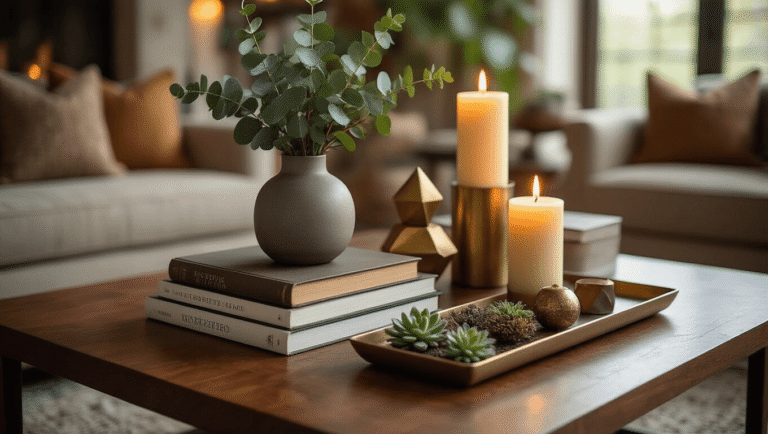
- One substantial item (large book, small plant, decorative bowl)
- One medium item (candle, small vase, sculptural object)
- One small item (coaster set, small succulent, interesting stone)
I keep my styling simple: a stack of photography books, a small ceramic bowl I made in a pottery class, and whatever interesting object caught my eye that week. The table’s natural beauty does the heavy lifting.
Budget-Smart Shopping Strategies
Authentic Vintage vs. Modern Reproductions
Vintage hunting pros:
- Unique pieces with character and history
- Often better construction than modern mass-produced items
- Investment potential for rare designers
Modern reproduction benefits:
- Consistent quality and sizing
- Warranty protection
- Readily available replacement parts
This post may contain affiliate links. Please see my disclosure policy for details.