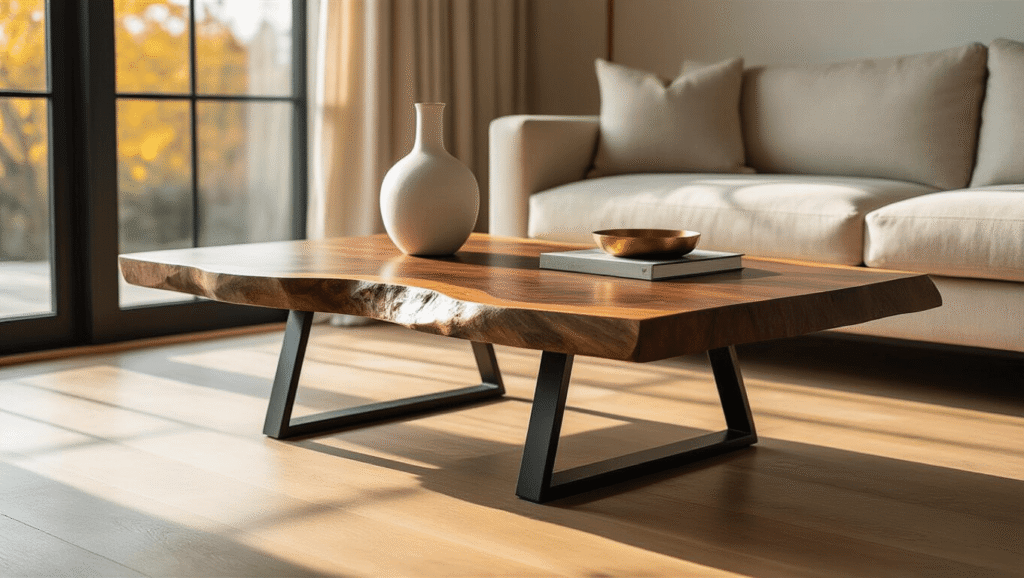
Live Edge Coffee Tables: Everything You Need to Create That Raw, Natural Vibe in Your Living Room
Contents
- Live Edge Coffee Tables: Everything You Need to Create That Raw, Natural Vibe in Your Living Room
- Why Live Edge Tables Hit Different
- What Actually Makes a Table “Live Edge”
- The Wood Species That Actually Matter
- Getting the Size Right (Because Nobody Talks About This Enough)
- Metal Legs: The Unsung Hero of These Tables
- The Finish Matters More Than You Think
- Styling Your Live Edge Table Without Trying Too Hard
Live edge coffee tables have completely taken over the interior design world, and honestly, I get it.
There’s something about walking into a room and seeing that raw, natural wood edge—untamed and organic—sitting right in the center of your space that just works.
No two pieces look the same. Each one tells its own story through knots, grain patterns, and that signature irregular edge that refuses to be tamed into submission.
If you’re considering one for your home, you’re probably wrestling with some questions right now.
Will it actually fit my style?
Is it just a trend that’ll look dated in three years?
How much should I spend?
And what the hell do I even look for when shopping for one?
I’ve been styling spaces with these beauties for years now, and I’m here to walk you through everything you need to know.
Why Live Edge Tables Hit Different
Let me tell you about the first time I saw a live edge table in person.
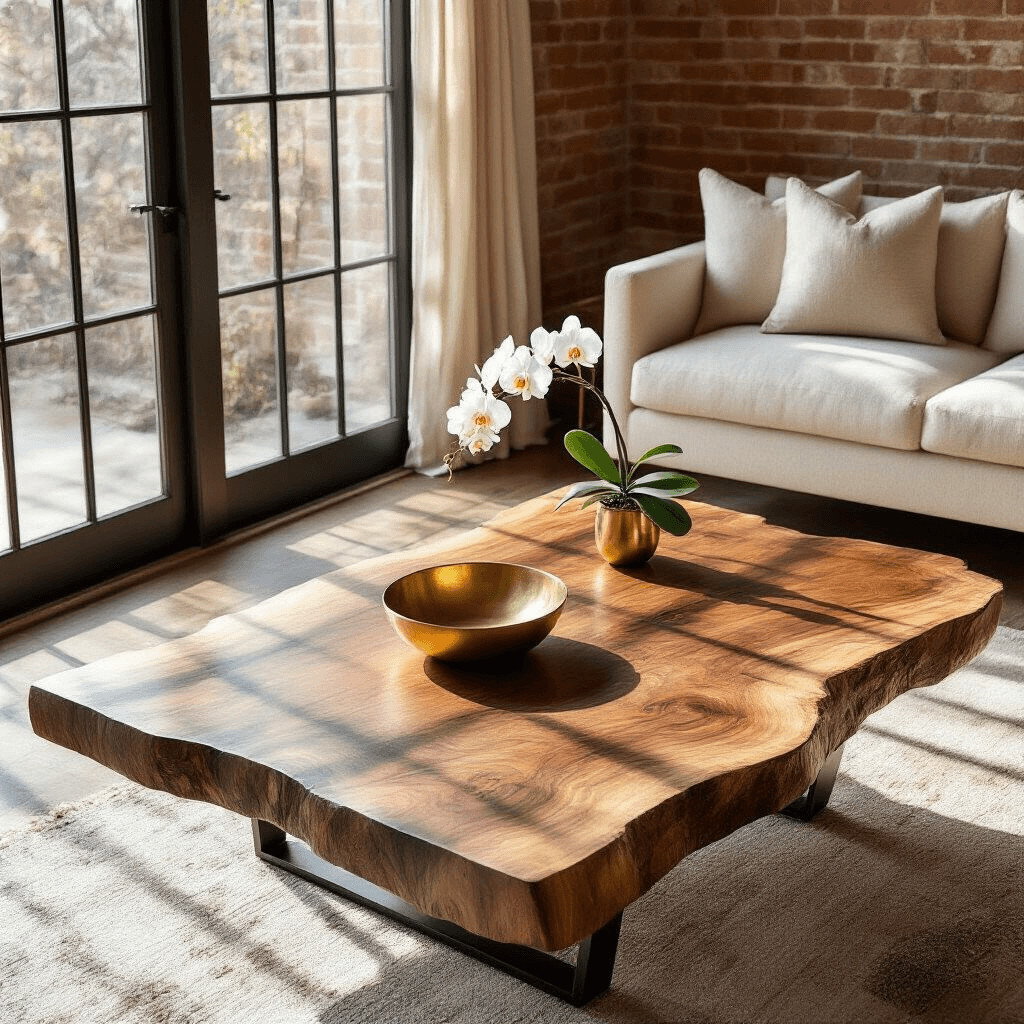
I was helping a friend stage her condo for sale, and she had this stunning walnut piece with the most gorgeous natural edge—like the tree decided exactly where the border should be, not some factory machine.
Every person who walked through that open house stopped and touched it. They’d run their fingers along that edge, almost instinctively.
That’s the magic of these tables.
They bring the outside in without trying too hard. They work as a conversation starter without screaming for attention. And they manage to look both rustic and refined at the same time—a trick that’s harder to pull off than you’d think.
What Actually Makes a Table “Live Edge”
Here’s the simple explanation: live edge means at least one side of the wood slab keeps its natural, original edge from when it was a tree.
No straight lines cut by a saw. No artificial shaping. Just the organic, irregular boundary that nature created.
The rest of the table gets the treatment it needs—sanding, smoothing, finishing—but that edge stays wild.
It’s like having a piece of the forest in your living room, minus the bugs and dirt.
The Wood Species That Actually Matter
Not all woods are created equal when it comes to live edge tables.
Here are the heavy hitters:
- Walnut: Rich, dark, sophisticated—this is the luxury option with gorgeous grain patterns
- Maple: Lighter, cleaner lines, works beautifully in modern spaces
- Oak: Classic, durable, with that traditional grain everyone recognizes
- Ash: Lighter than walnut but still plenty of character
- Cherry: Warm reddish tones that deepen over time
I’m partial to walnut myself.
There’s something about those deep chocolate tones that makes everything else in the room look better by association.
But if your space is already dark or you’re going for that Scandinavian-minimalist vibe, maple gives you that clean backdrop without losing the organic feel.
Want to browse options? Check out live edge walnut coffee tables or live edge maple coffee tables to see the difference yourself.
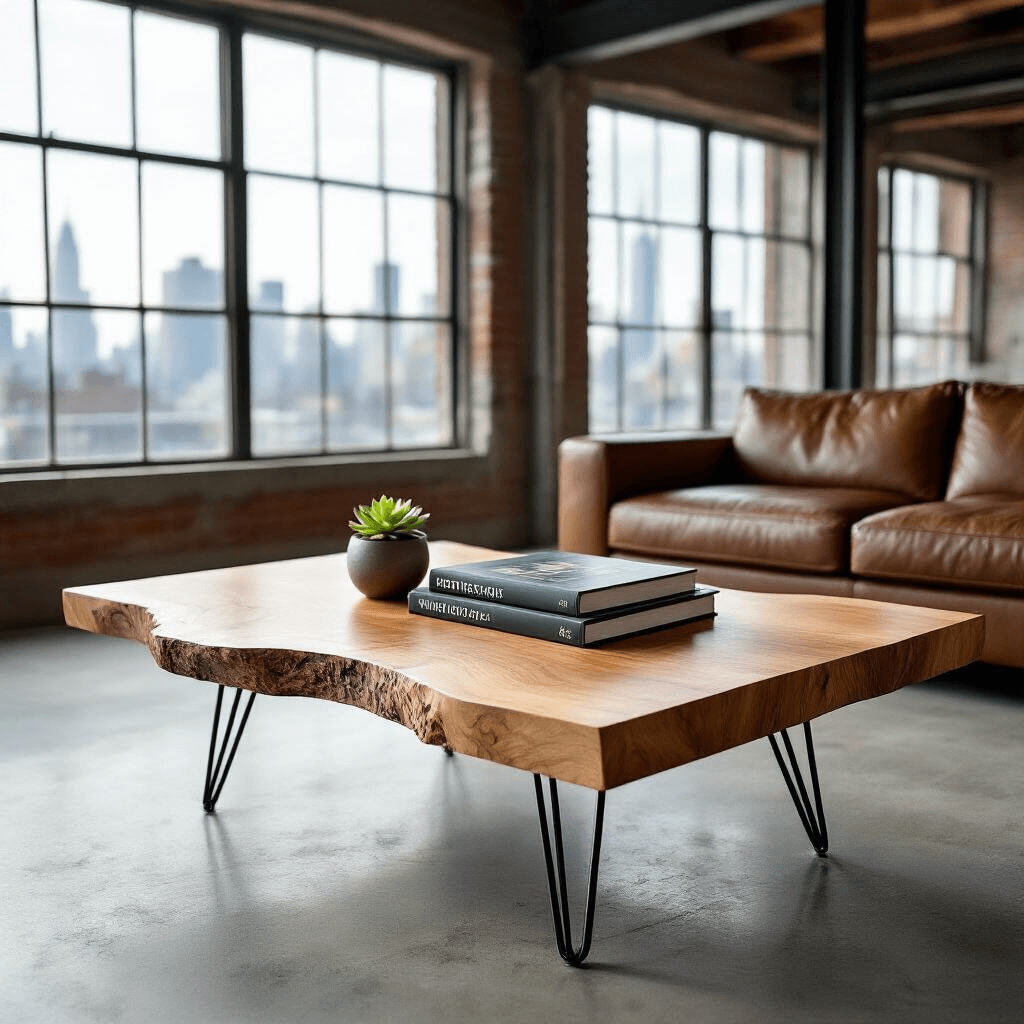
Getting the Size Right (Because Nobody Talks About This Enough)
This is where people mess up constantly.
They fall in love with a table online, order it, and then it arrives and completely throws off the room’s proportions.
Here’s what you actually need to know:
Height: 16-18 inches is standard, and it should sit about 1-2 inches lower than your couch seat.
If your coffee table is too high, it looks awkward and makes reaching for your drink feel like a workout. Too low, and it disappears visually.
Length: As a rule, your coffee table should be about two-thirds the length of your sofa.
- Small spaces: 42-48 inches works
- Standard living rooms: 50-60 inches hits the sweet spot
- Large spaces: 60-70+ inches makes a statement
Width: 18-24 inches for narrow spaces, 24-36 inches if you’ve got room to breathe.
I made the mistake once of putting a 36-inch-wide beast in a client’s apartment, and suddenly the room felt like an obstacle course.
We swapped it for a 22-inch width, and everything opened up.
Metal Legs: The Unsung Hero of These Tables
Nobody gives enough credit to the leg situation.
The legs on a live edge table aren’t just functional—they’re half the aesthetic.
Popular leg styles:
- Black metal sled legs: Industrial, modern, super clean lines
- Hairpin legs: Mid-century vibes, lighter visual weight
- U-shaped legs: Bold, architectural, makes a statement
- Wood legs: Keeps everything warm and organic if metal feels too cold
I’m team black metal sled legs all the way.
They ground the piece without competing with that gorgeous wood top, and they work with almost any decor style.
Looking for the right combination? Browse live edge coffee tables with metal legs to see what catches your eye.
The Finish Matters More Than You Think
A live edge table without the right finish is like buying an expensive car and never changing the oil.
The finish protects your investment and determines how the table holds up to real life—spilled wine, coffee rings, kids with markers.
Your main options:
- Hardwax oil: Natural look, easy to repair, requires occasional maintenance
- Polyurethane: Super durable, water-resistant, slightly more plastic-looking
- Epoxy: Glass-like finish, completely waterproof, very modern aesthetic
I typically recommend polyurethane for families with kids or anyone who actually uses their coffee table for coffee.
Hardwax oil is beautiful and more natural-looking, but it needs love and attention.
Epoxy is stunning but can feel a bit too polished for some tastes—it loses some of that raw, organic vibe.
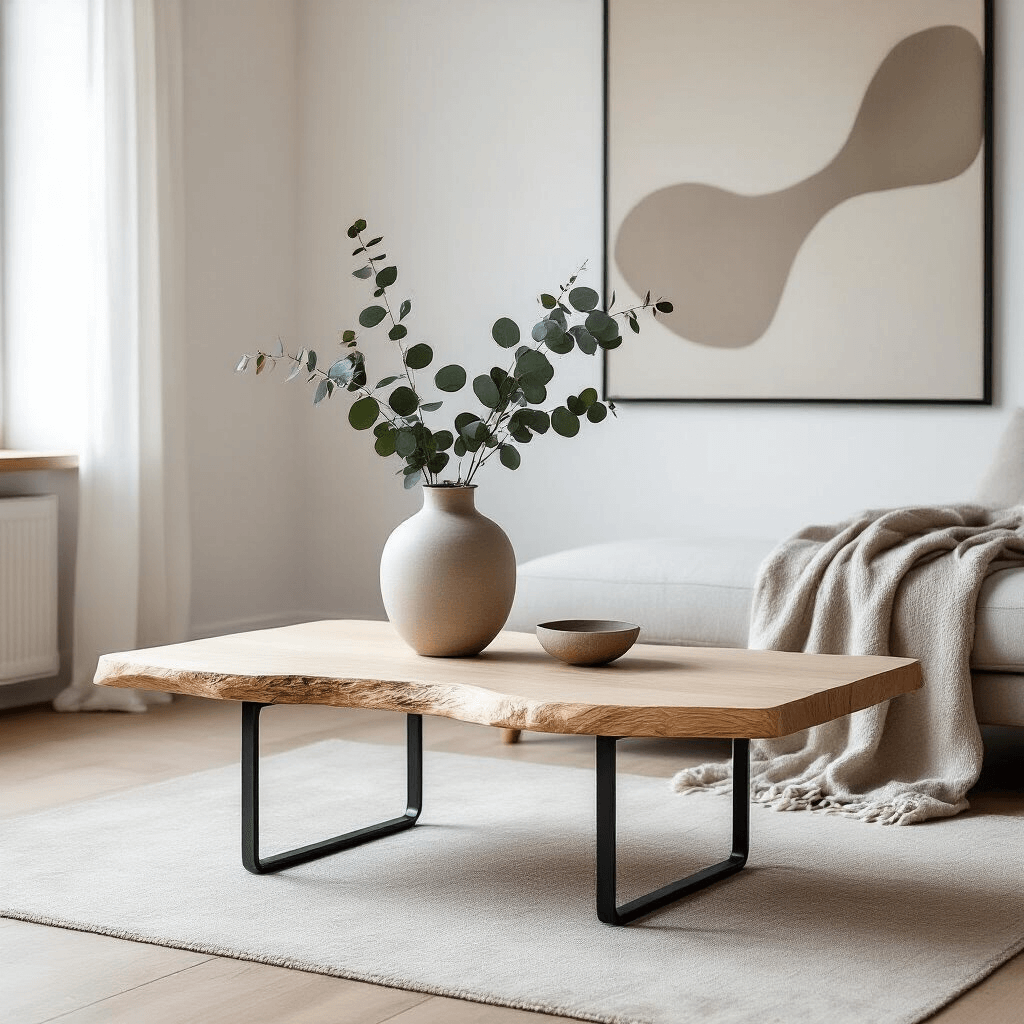
Styling Your Live Edge Table Without Trying Too Hard
This is where I see people overthink things.
A live edge table already has tons of visual interest. You don’t need to cover it with stuff.
My go-to styling formula:
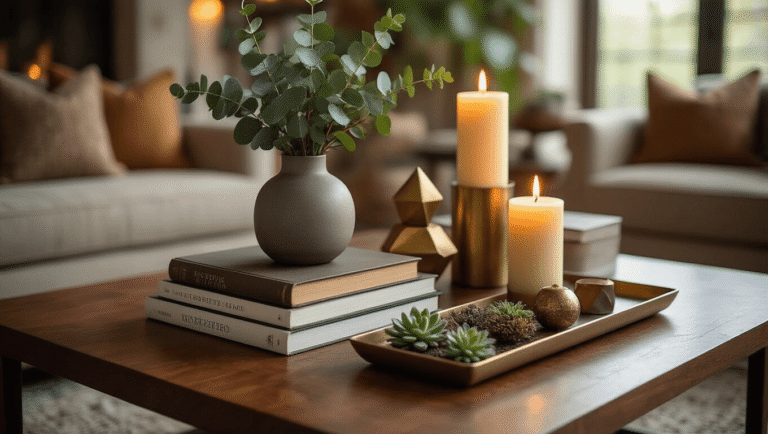
One large element: A beautiful coffee table book, a wooden bowl, or
This post may contain affiliate links. Please see my disclosure policy for details.