Why Everyone’s Talking About De’Longhi (And Whether You Should Care)
Contents
De’Longhi coffee makers have taken over kitchen counters everywhere, and honestly, I get why people are obsessed.
But here’s the thing that drives me mental: everyone’s asking which one to buy without understanding what they actually need.
You don’t want to drop £300 on a machine that either collects dust or makes you want to throw it out the window every morning.
Let me walk you through everything I’ve learned about these machines, because I’ve tested enough of them to know what works and what’s just marketing nonsense.
The Four Types You Need to Know About
Bean-to-Cup Automatic Machines: The Lazy Genius Option
These are the machines that do everything while you stand there like royalty. Push a button, get a cappuccino.
Popular models:
- Primadonna Aromatic (the show-off with 38 drink settings)
- Magnifica S Smart (the sensible choice)
- Dinamica Plus (the middle ground)
- Rivelia (the new kid that’s actually impressive)
I’ll be honest: once you’ve used a proper automatic bean-to-cup coffee machine, going back to anything else feels like punishment.
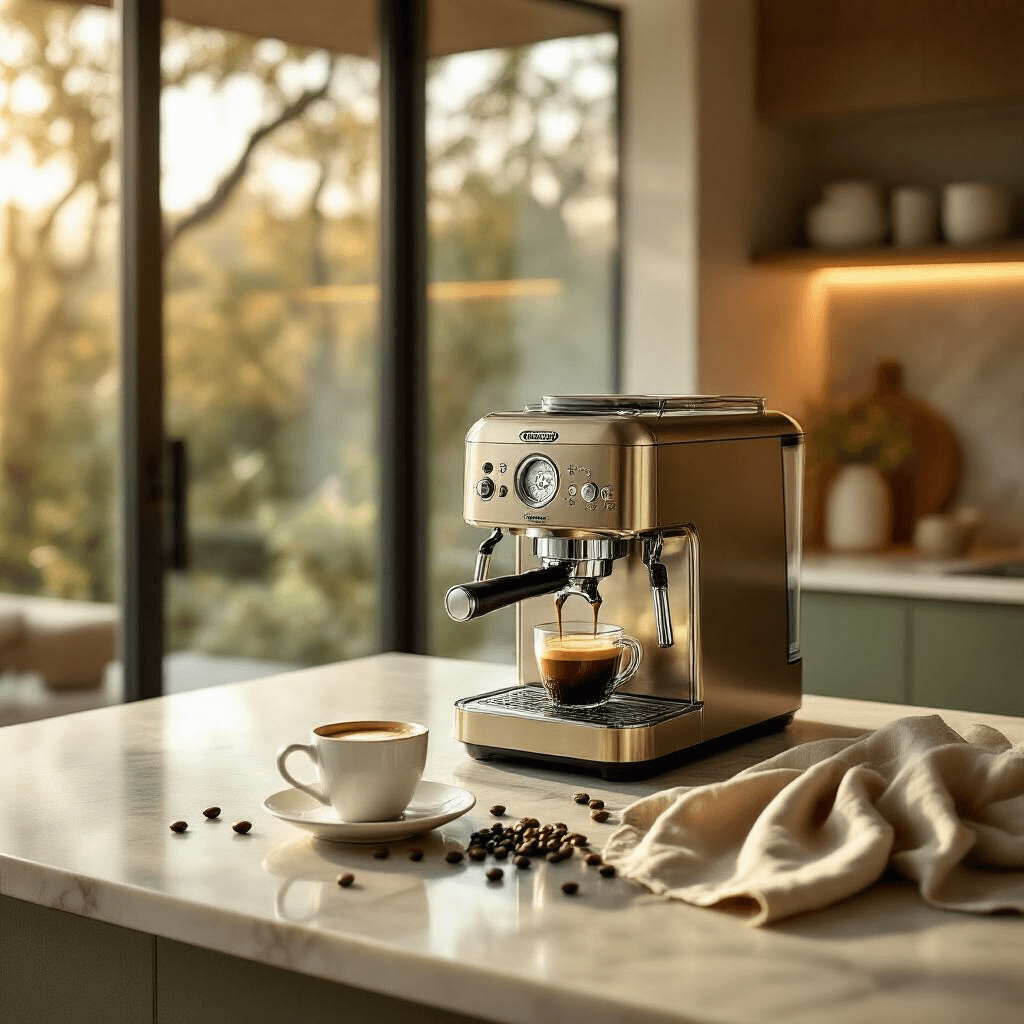
The Magnifica S Smart sits on my counter right now, and it’s earned its spot. Compact enough that it doesn’t dominate the kitchen, but powerful enough to make espresso that actually tastes like espresso.
Manual and Semi-Automatic Espresso Machines: For Control Freaks
The Dedica EC685.M is De’Longhi’s answer to “I want espresso but my kitchen is tiny.” It’s lightweight, genuinely compact, and you can steam milk with it.
The catch? You’re doing the work. Grinding, tamping, timing your shot, steaming your milk. For some people, that’s the entire point.
The La Specialista Maestro takes it further with dual heating systems and smart tamping. It’s for people who want control without making coffee-making their entire personality.
The All-in-One: Because You Want Everything
The De’Longhi All-in-One is bonkers in the best way. Drip coffee? Check. Espresso? Check. Milk steaming? Check. Cup warming? Also check.
My take: If your counter space is limited but you refuse to compromise, this is your machine.
I tested this at a friend’s flat where the kitchen is basically a hallway. It replaced three appliances and actually freed up space.
Budget Warriors: The Stilosa
The De’Longhi Stilosa costs less than a fancy dinner but makes surprisingly solid espresso. Here’s what shocked me: The shot quality rivals machines three times the price.
Heat-up is 3-5 minutes, which feels slow until you realize premium machines aren’t much faster.
The Features That Actually Matter
Bean Adapt Technology: Not Marketing Waffle
This genuinely works. The machine detects your beans and adjusts the grind automatically. Different roasts, different origins, different densities—it compensates.
Grind Settings: More Important Than You Think
De’Longhi machines offer 3 to 18 grind settings depending on the model.
Why this matters:
- Finer grinds for stronger espresso
- Coarser grinds for longer drinks
- Adjustability for different bean types
- Control over extraction time
Milk Frothing: Where Good Machines Become Great
Two systems dominate De’Longhi’s range:
Manual steam wands give you control but require technique. You’re angling the milk frothing pitcher, listening for the right sound, watching the temperature.
LatteCrema automatic systems found on the Dinamica and similar models do everything automatically. Pour milk in, press a button, get perfect foam.
The Rivelia’s microfoam deserves special mention. It creates texture specifically designed for flat whites—dense, velvety, professional-level foam.
The Models Everyone Actually Buys
Magnifica S Smart: The Sensible Classic
This is the one I own, and I’m not just saying nice things because it’s mine.
Why it works:
- Compact footprint (finally fits on actual kitchen counters)
- Quality espresso with silky crema
- Affordable compared to premium models
- Fewer drink settings means less decision fatigue
- 13 grind settings (plenty for most people)
- Easy cleaning routine
Primadonna Aromatic: The Overachiever
38 drink settings. Let that sink in.
I tested this and honestly: You’ll use maybe 8 of those settings regularly. But the personalized profiles are brilliant for households where everyone wants their coffee differently.
Rivelia: The New Contender
The Rivelia launched recently and it’s gunning for espresso snobs.
What makes it special:
- Exceptional microfoam for milk drinks
- Dual bean hoppers (two different beans, one machine)
- Best espresso quality in De’Longhi’s home range
- Modern aesthetic that doesn’t look like a spaceship
Dedica EC685.M: The Space Saver
15cm wide. That’s narrower than most toasters.
Perfect for:
- Tiny kitchens
- First apartments
- Office spaces
- People who want espresso without the commitment
What Nobody Tells You About De’Longhi Machines
The Space Issue Is Real
Even “compact” models are substantial. The Magnifica S Smart is considered small, and it still occupies serious counter real estate.
Measure your space before ordering.
Running Costs Are Surprisingly Low
De’Longhi claims 1.1p to 2.4p per coffee based on daily use.
That factors in:
- Electricity consumption
- Water descaling tablets
- Cleaning cycles
- Wear on internal parts
The Cleaning Situation
Automatic machines need regular cleaning, and De’Longhi makes this easier than most brands.
Warranty and Registration Matter
All De’Longhi machines come with a 2-year standard warranty. Register your machine within 28 days and get 3 years
This post may contain affiliate links. Please see my disclosure policy for details.