Coffee Corner Ideas for Small Spaces: Transform Your Tiny Nook Into a Perfect Brew Station
Contents
- Coffee Corner Ideas for Small Spaces: Transform Your Tiny Nook Into a Perfect Brew Station
- Why Your Small Space Deserves a Dedicated Coffee Corner
- The Floating Shelf Plus Cabinet Strategy
- The Beverage Center Combo Approach
- Going Full Minimalist Without Going Boring
- Four Design Styles That Actually Work in Tight Quarters
- Furniture That Doesn’t Trap You
- Location, Location, Location (Even When You Have No Location)
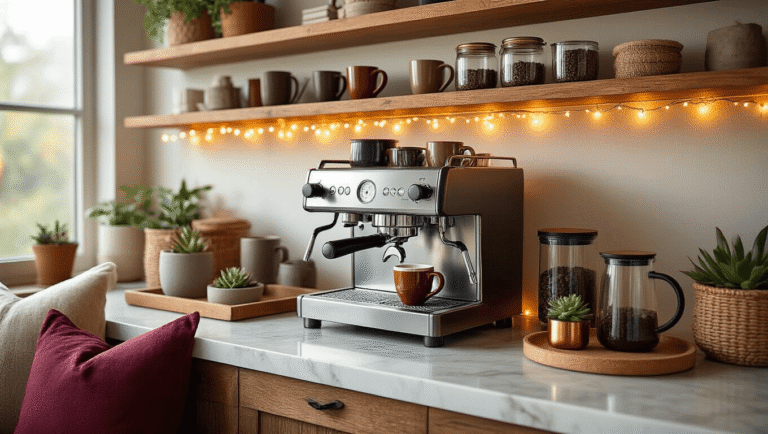
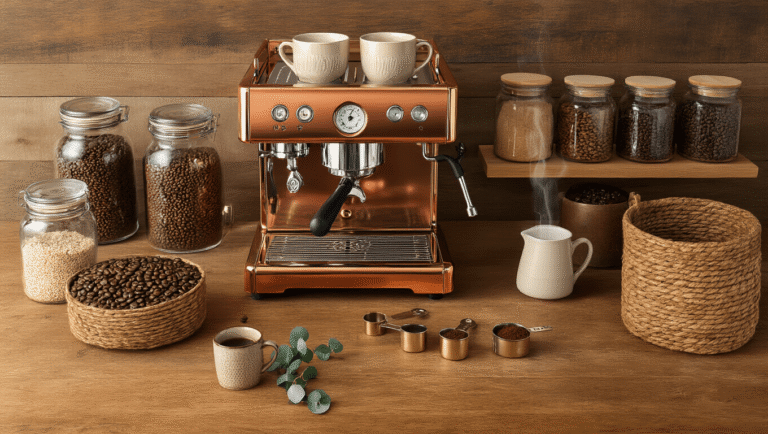
Coffee corner ideas for small spaces don’t require a massive kitchen or dedicated room to create the perfect morning ritual spot.
I’ve lived in apartments where my entire kitchen could fit inside a walk-in closet, and I still managed to carve out a coffee station that made me actually look forward to Monday mornings.
Let me share what actually works when you’re dealing with limited square footage but unlimited caffeine ambitions.
Why Your Small Space Deserves a Dedicated Coffee Corner
You might think a coffee station is a luxury reserved for people with sprawling kitchens and Pinterest-perfect homes. Wrong.
A well-organized coffee corner in a small space actually saves you time, reduces morning chaos, and gives you that one spot in your home that’s purely about pleasure, not function.
I learned this the hard way after spending six months pulling my coffee maker out of a cabinet every single morning, then shoving it back in after my cup was ready.
That’s not living—that’s surviving.
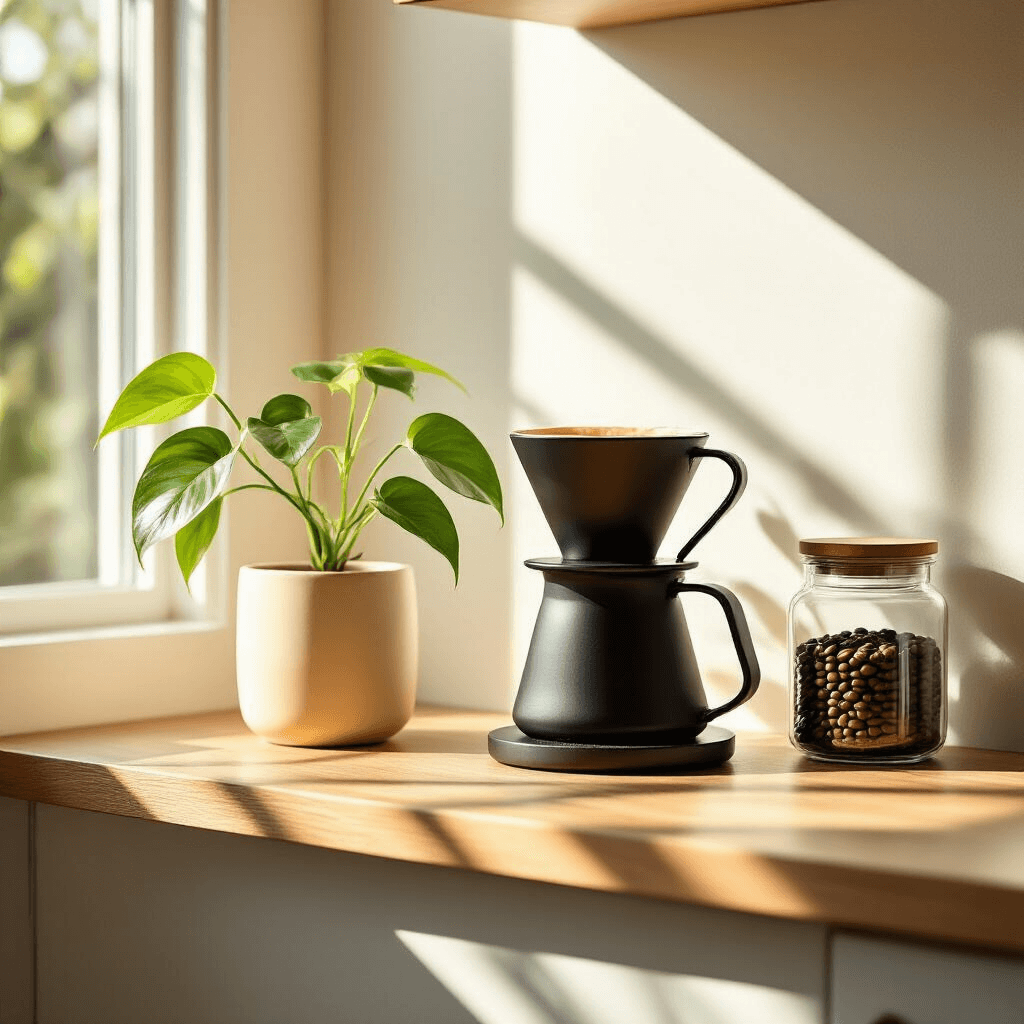
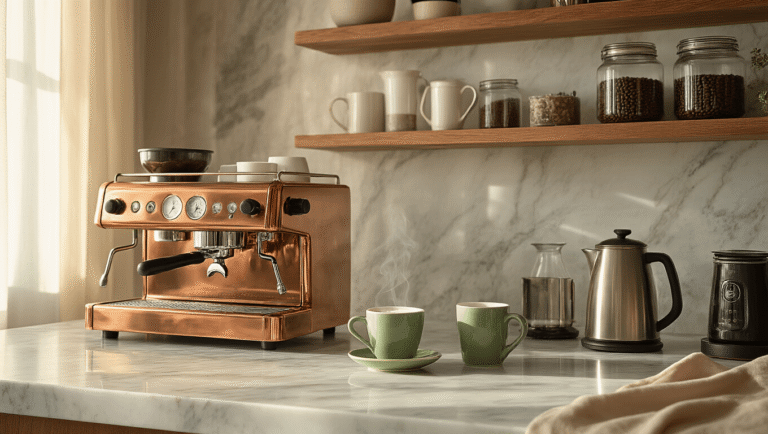
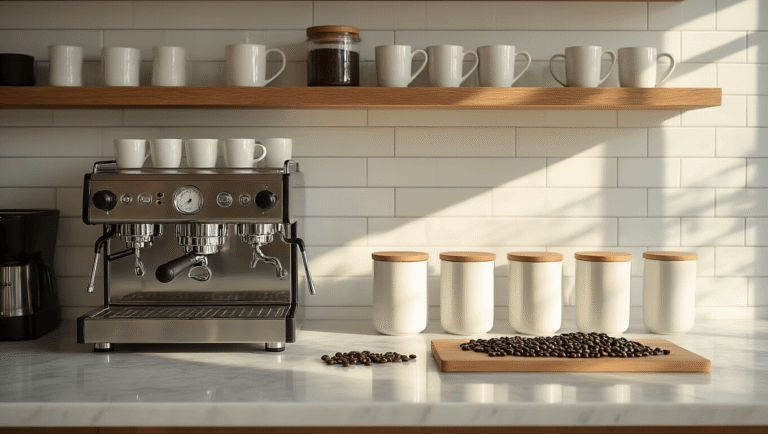
The Floating Shelf Plus Cabinet Strategy
This approach changed everything for me.
You get the hidden storage of an upper cabinet for things you don’t need every day, while keeping your daily essentials visible and accessible on floating shelves below.
What goes in the cabinet:
- Extra coffee beans
- Backup filters
- Seasonal mugs
- That fancy French press you use twice a year
What stays on the open shelves:
- Your everyday coffee maker
- Your three favorite mugs (yes, just three)
- Current coffee supply
- Sugar and cream containers
The visual balance keeps things from looking cluttered while maintaining everything you need within arm’s reach.
I installed mine in a corner that previously housed nothing but dust and regret, and suddenly I had a functional coffee bar that took up maybe 18 inches of wall space.
The Beverage Center Combo Approach
If you’ve got vertical space but zero horizontal room, this solution is brilliant.
Swap those lower cabinets for a mini fridge.
Suddenly your coffee corner pulls double duty as a beverage station—cold brew, milk, creamer, and even wine for those Friday afternoons when coffee just won’t cut it.
Here’s what makes this work:
The mini fridge sits at the bottom, creating a counter surface on top.
Above that, you’ve got your coffee maker and essentials.
Above that, floating shelves or a small cabinet.
You’ve created a complete beverage station in the footprint of a single cabinet.
I did this in my last apartment, and guests genuinely thought I had a built-in bar.
Nope—just strategic furniture placement and a $120 mini fridge from Amazon.
Going Full Minimalist Without Going Boring
Minimalist coffee stations get a bad rap for looking sterile.
They don’t have to.
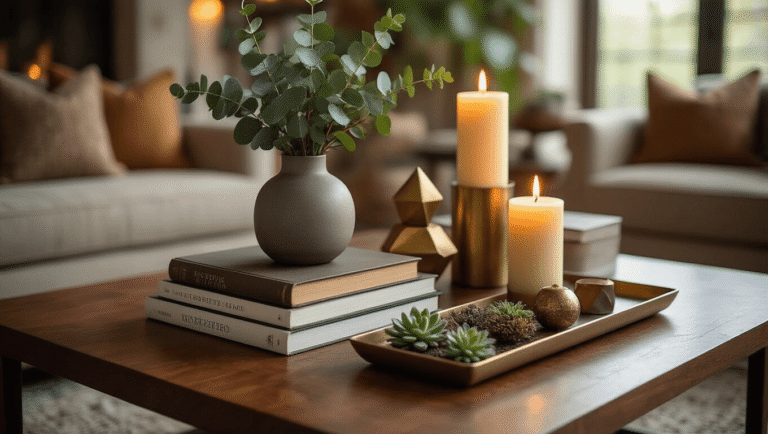
The trick is using neutral colors with one interesting element that catches the eye.
My minimalist coffee corner formula:
Start with a simple wooden console table in natural wood or white.
Add your coffee maker (preferably in black or stainless steel).
Place a single plant—something with personality like a small fiddle leaf fig or pothos.
Keep three items maximum on display: coffee maker, one beautiful canister for beans, and that plant.
Everything else hides in a drawer or basket underneath.
The result looks intentional, not cluttered, and you can still find everything in three seconds flat on a Monday morning.
Four Design Styles That Actually Work in Tight Quarters
Modern Minimalist
Clean lines, matte black accents, and absolutely zero clutter.
This works when your space is really tight because it tricks the eye into seeing more space than actually exists.
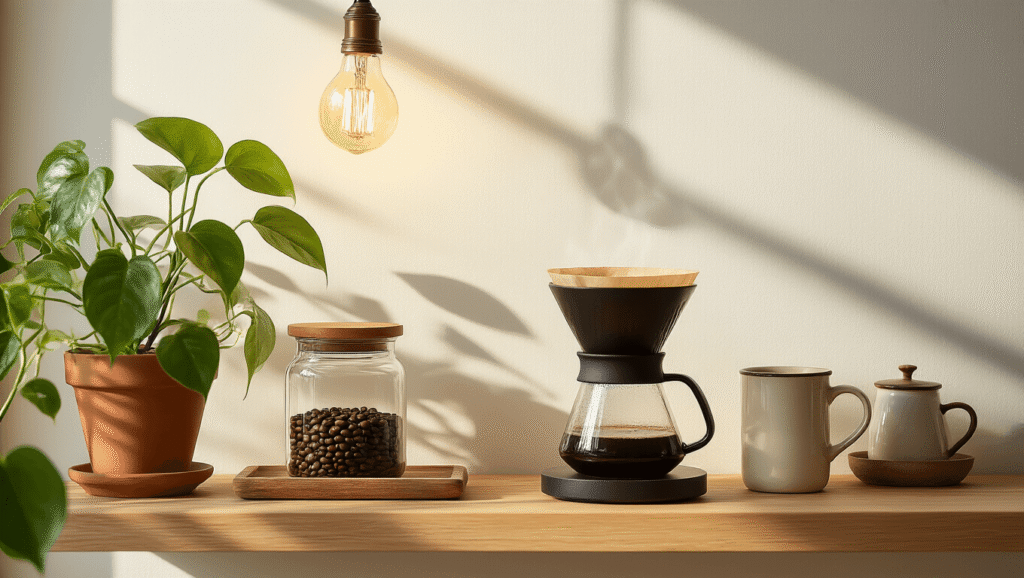
I use a matte black pour-over coffee maker that doubles as sculpture.
One ceramic container holds beans.
Done.
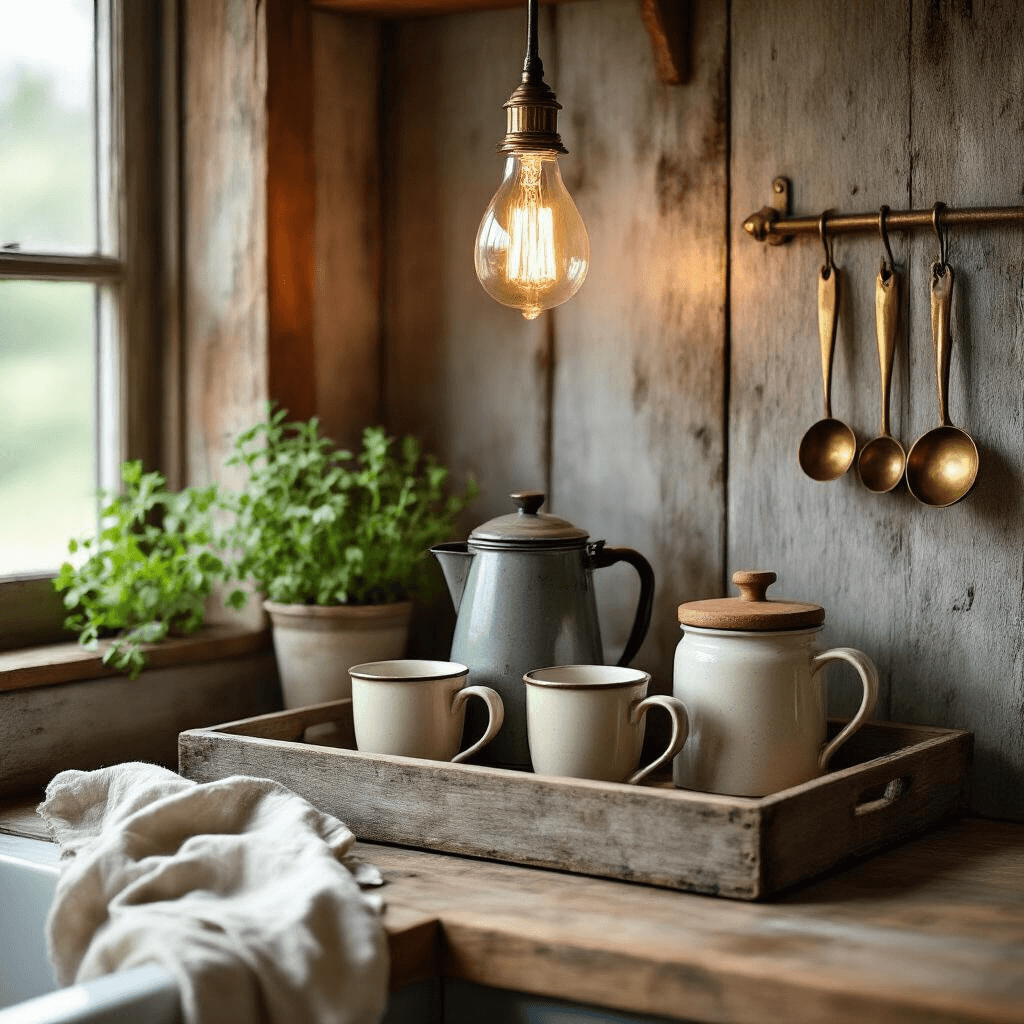
Rustic Farmhouse
Wooden trays, vintage-looking enamelware mugs, and warm lighting.
This style adds coziness to small spaces without adding visual weight.
Use a worn wooden tray to corral everything—your brain sees “one object” instead of “seven different things.”
Add a small Edison bulb lamp, and suddenly your 2×2 foot corner feels like a cabin retreat.
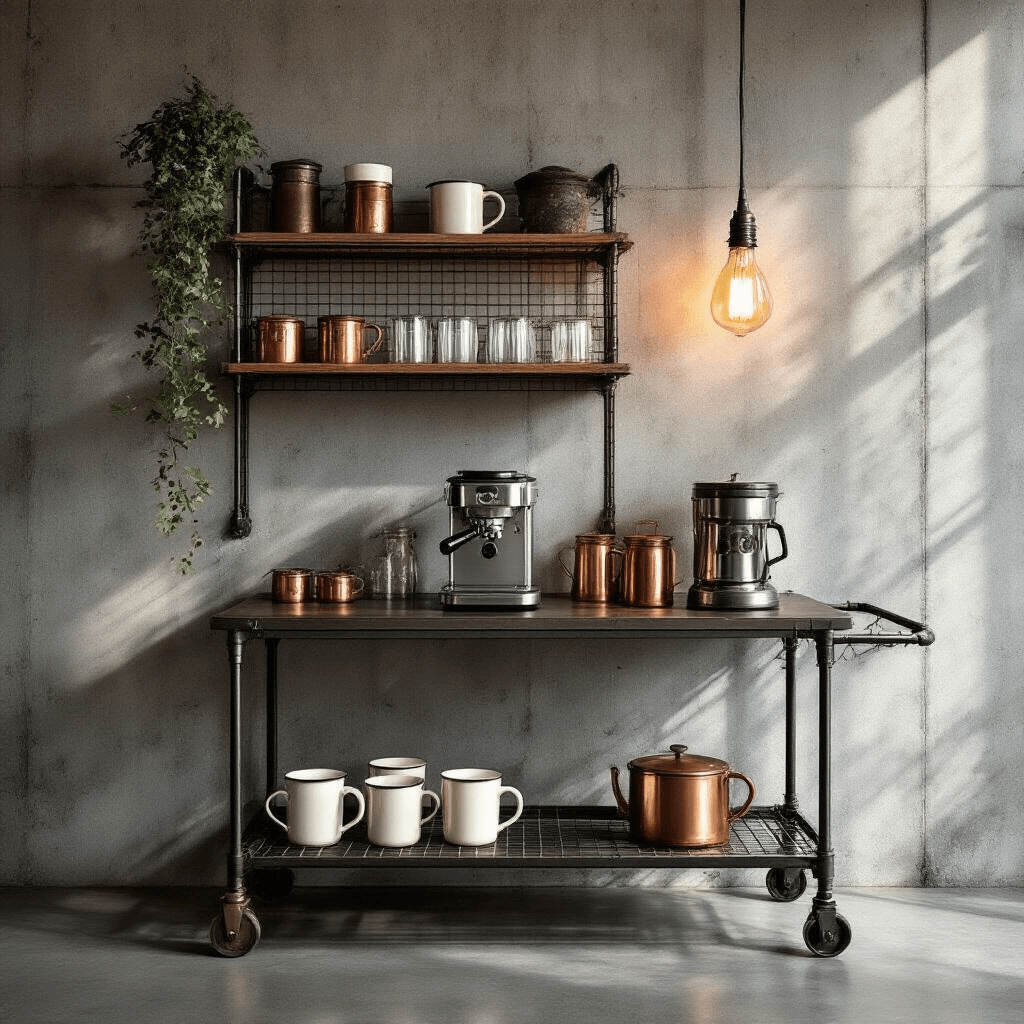
Industrial Edge
Exposed metal shelving, concrete or slate elements, and utilitarian design.
This approach maximizes every inch because industrial furniture is designed for efficiency.
Metal wire shelving weighs nothing visually—you can see through it, which makes your space feel larger.
I’ve seen people create stunning coffee corners using nothing but a metal utility cart and some hooks.
Tropical Minimalism
Pastel accents, lots of green plants, and natural materials.
This sounds counterintuitive for small spaces, but plants actually make rooms feel larger by drawing the eye upward and creating depth.
One large plant next to your coffee station does more for your space than five small decorative objects.
Trust me on this.
Furniture That Doesn’t Trap You
Built-in cabinets are beautiful, but they’re permanent.
Flexible options that work better in small spaces:
Bar carts give you mobility—roll it out when you’re making coffee, roll it away when you need the floor space.
Narrow console tables (12 inches deep or less) fit in spaces you didn’t even know you had.
IKEA hacks using their basic shelf units with added doors, paint, or hardware give you custom-looking storage at DIY prices.
Wall-mounted drop-leaf tables fold up completely when not in use.
I used a bar cart for two years, and being able to wheel my entire coffee station onto my tiny balcony on nice mornings was worth every penny.
Location, Location, Location (Even When You Have No Location)
Finding the right spot matters more than having the perfect furniture.
Prime real estate for coffee corners:
- That awkward kitchen corner that’s too small for anything else
- The end of your counter near an outlet
- A slice of your dining area (if you’re honest about never eating there anyway)
- Your home office (dangerous but convenient)
- The space next to your fridge that’s currently collecting junk mail
I once created a coffee station in the 14-inch gap between my fridge and wall using
This post may contain affiliate links. Please see my disclosure policy for details.