How to Deep Clean Your Coffee Maker with Vinegar: My Battle Against Coffee Grime
Contents
Cleaning your coffee maker with vinegar might sound like mixing two things that shouldn’t go together, but trust me on this one.
After years of watching my once-pristine coffee maker turn into a mineral-crusted monster, I learned that this simple kitchen staple is the ultimate weapon against coffee buildup.
You know that moment when your morning brew starts tasting like it was filtered through a swamp? Or when your coffee maker sounds like it’s having an asthma attack during each brew cycle? That’s your machine crying out for help.
I’ve been there, standing in my kitchen at 6 AM, desperately trying to coax decent coffee from a machine that clearly needed intervention.
Why Your Coffee Maker Desperately Needs This Vinegar Treatment
Here’s what I discovered after ignoring my coffee maker’s pleas for months:
Mineral buildup is real – and it’s sabotaging your coffee experience every single day. Those white, chalky deposits aren’t just unsightly. They’re actually blocking water flow and making your machine work harder than a contestant on Hell’s Kitchen.
The science is simple but brutal:
- Hard water leaves calcium and lime deposits
- Coffee oils turn rancid over time
- Bacteria and mold love damp, warm environments
- Your coffee tastes progressively worse
I learned this lesson the hard way when my automatic drip coffee maker started producing coffee that tasted like it had been sitting in a basement for weeks.

The Complete Vinegar Deep-Clean Process
Step 1: Prep Your Machine Like a Pro
First things first – unplug that machine. I can’t tell you how many times I’ve tried to clean electronics while they’re still powered up. Not my brightest moments.
Remove every single removable part:
- Carafe
- Brew basket
- Water filter (if you have one)
- Any other detachable components
Wash these pieces with warm, soapy water using a gentle dish soap. This removes the surface oils and coffee residue that regular rinsing misses.

Step 2: Master the Vinegar Solution
Here’s where most people mess up – the ratio matters more than you think.
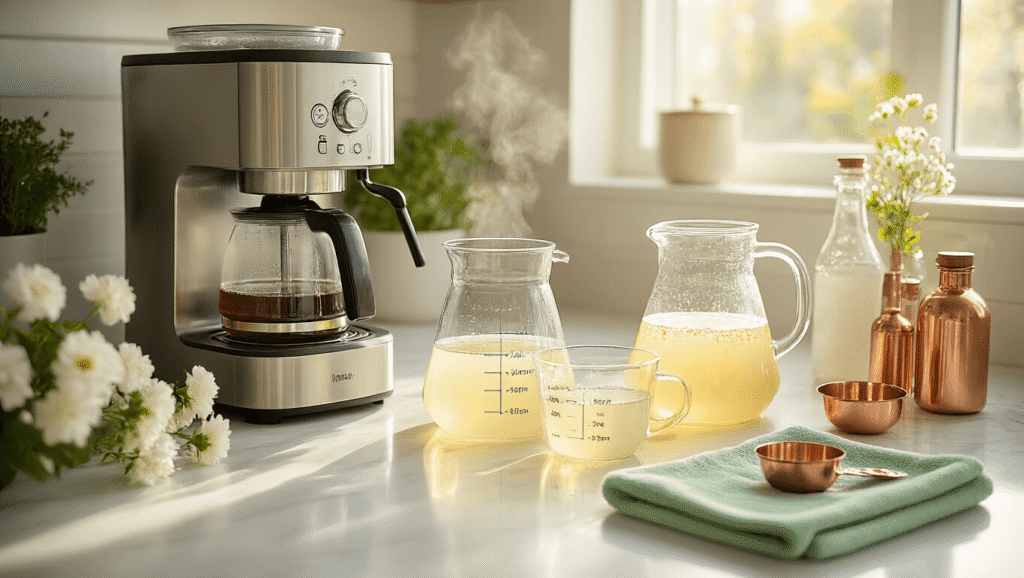
Mix 1 part white vinegar to 2 parts water in your water reservoir. Fill it to the maximum line, but don’t go overboard.
Some cleaning guides suggest equal parts, but I’ve found that’s overkill for most machines. Too much vinegar can actually damage plastic components or metal parts. Trust me, I learned this after nearly destroying a perfectly good coffee carafe.
Only use white distilled vinegar. Apple cider vinegar might be trendy, but it leaves residue. Cleaning vinegar is too harsh. Plain white vinegar is your friend here.
Step 3: The Strategic Halfway Stop
Start your brew cycle and let it run until the carafe is about half full. Then stop the machine.
This is the crucial part that most people skip. Let that vinegar solution sit in your machine for 15 to 30 minutes.
If your coffee maker has been neglected longer than a forgotten gym membership, let it soak for up to 60 minutes.
During this time, the vinegar is working its magic:
- Breaking down mineral deposits
- Dissolving coffee oil buildup
- Clearing blocked pathways

Step 4: Complete the Purge
Restart your machine and let the remaining vinegar solution brew completely. The liquid coming out might look pretty gross – that’s all the gunk that was lurking in your machine.
Discard this solution immediately. Don’t even think about tasting it out of curiosity. I made that mistake once, and it’s not an experience I recommend.
Step 5: The Critical Rinse Cycle
This step separates the pros from the amateurs.
Run two to three complete brew cycles using only fresh water. Empty the water between each cycle.
The first rinse cycle removes the bulk of the vinegar. The second cycle gets rid of most of the remaining residue. The third cycle ensures you won’t taste vinegar in tomorrow’s coffee.
Skip this step, and you’ll be drinking vinegar-flavored disappointment for days.

Pro Tips That Actually Work
Monthly Maintenance Is Non-Negotiable
I clean my removable parts after every use now. It takes two minutes and prevents the hardcore buildup that requires marathon cleaning sessions.
The full vinegar treatment happens once a month, like clockwork. Mark it on your calendar next to other adulting responsibilities.
The Baking Soda Backup Plan
If vinegar smell persists after thorough rinsing, add a small pinch of baking soda to fresh water and run another cycle. This neutralizes any lingering vinegar odor.
I keep a small container of baking soda in my coffee station specifically for this purpose.
Safety First (Because Chemistry Matters)
Never, ever mix vinegar with bleach. This creates chlorine gas, which is legitimately dangerous. Keep these cleaning agents separate and use them on different days if needed.
What You’ll Notice After Deep Cleaning
The difference is honestly shocking.
Your coffee maker will:
- Brew faster and more quietly
- Produce hotter coffee
- Stop making those weird gurgling sounds
- Deliver better-tasting coffee
I noticed these changes immediately after my first proper vinegar cleaning. The coffee tasted cleaner, brighter, and actually resembled what I was trying to brew.
Maintaining Your Newly Clean Machine
Air-dry everything completely before reassembling. Moisture trapped in closed components is an invitation for mold and bacteria.
Keep your reservoir lid open between uses. This simple habit prevents moisture buildup and
Your coffee maker is the hardest-working appliance in your kitchen, brewing daily without complaint—until mineral buildup steals its performance. Deep cleaning with vinegar is the maintenance ritual that keeps your machine humming and your mornings tasting fresh.
This post may contain affiliate links. Please see my disclosure policy for details.