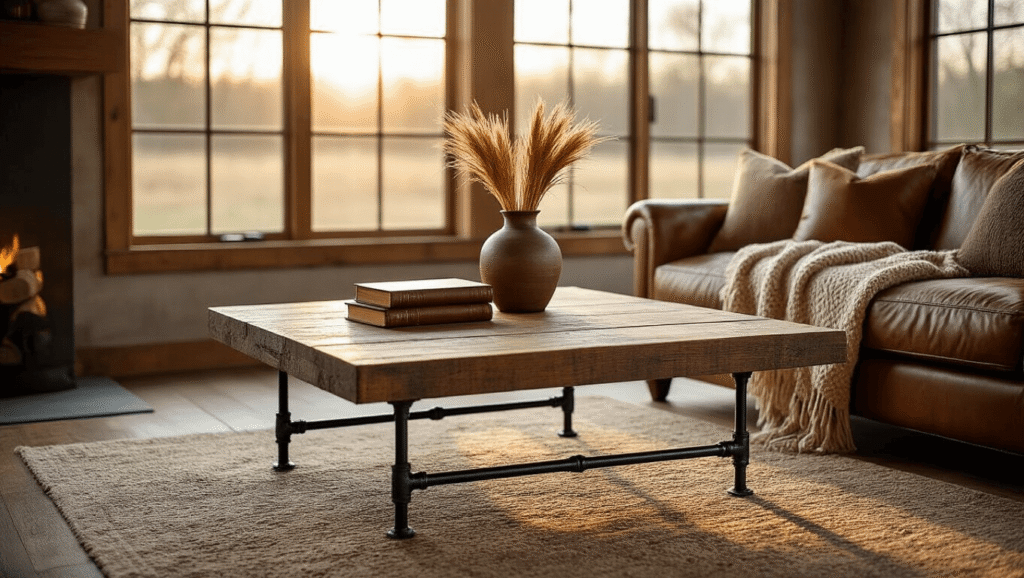
Why Everyone’s Going Crazy for Farmhouse Coffee Tables
Contents
- Why Everyone’s Going Crazy for Farmhouse Coffee Tables
- Solid Wood Construction: The Real Deal
- Storage That Actually Makes Sense
- Distressed Finishes: Character You Can’t Buy
- Mixed Materials: Modern Meets Rustic
- Size Matters: Getting the Proportions Right
- Choosing Your Wood: What Actually Matters
- Design Variations: Finding Your Perfect Match
- Shopping Smart: Where to Find Quality Pieces
- DIY Options: Building Your Own Character
Let me tell you something – these aren’t just tables. They’re conversation starters, problem solvers, and the kind of furniture that makes your guests ask “Where did you get that?”
I’ve watched friends transform their entire living spaces around one single farmhouse coffee table. The magic lies in how they anchor a room without overwhelming it.
Here’s what makes them irresistible:
- They work with virtually any decorating style
- Built to last decades (not just until next season)
- Storage solutions that actually solve real problems
- Each piece has genuine character and personality
Solid Wood Construction: The Real Deal
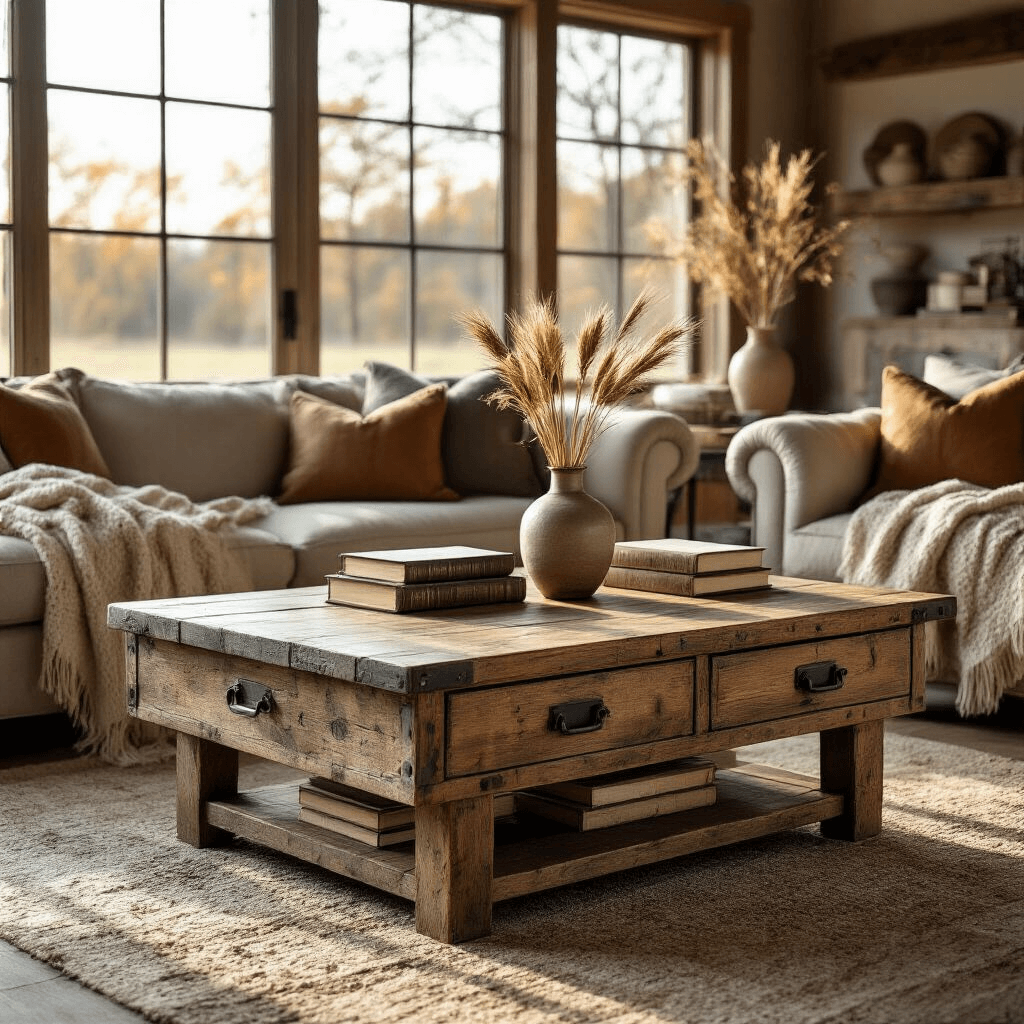
When I say solid wood, I mean SOLID WOOD. None of that particleboard nonsense wrapped in fake wood stickers.
Real farmhouse coffee tables showcase:
- Natural grain patterns that are completely unique
- Substantial weight that screams quality
- Wood that ages beautifully over time
- Surfaces that can handle real life (coffee spills, kids, pets)

Storage That Actually Makes Sense
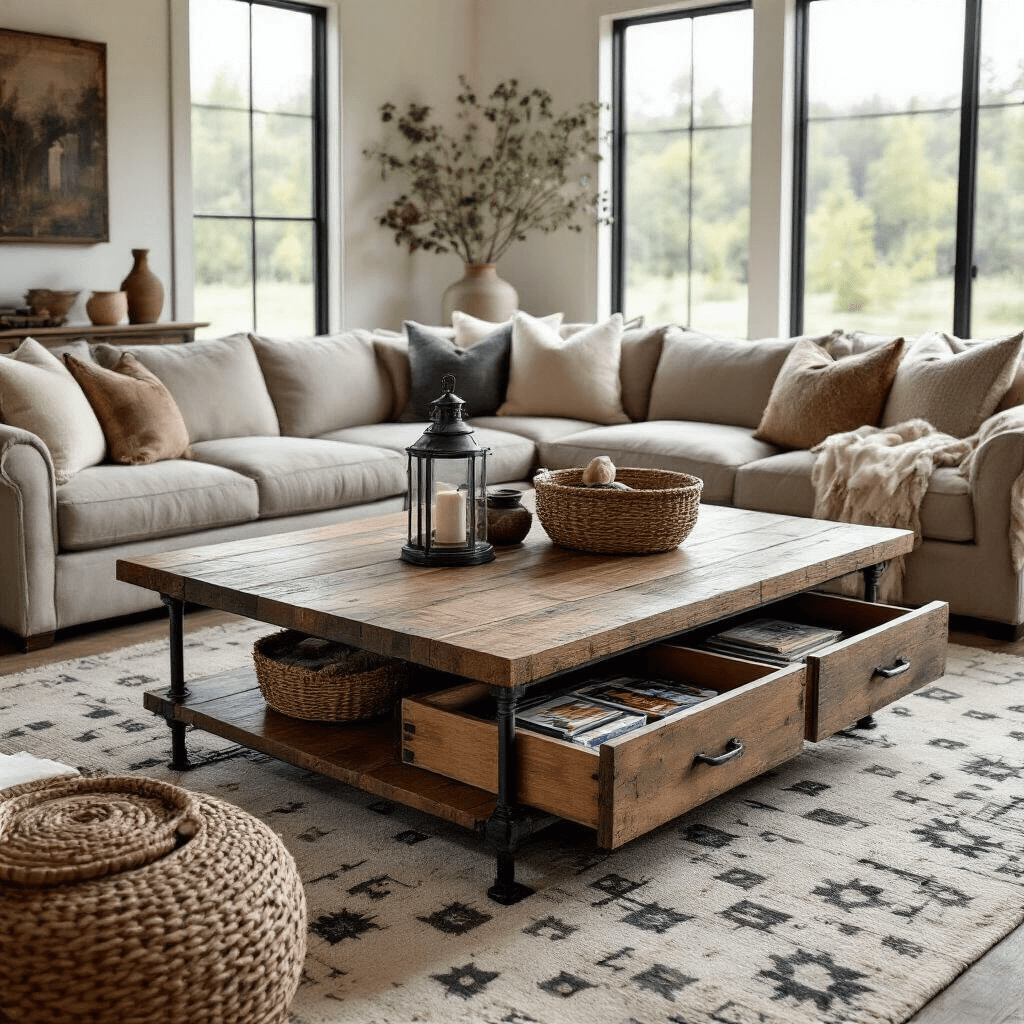
This is where farmhouse coffee tables blow regular tables out of the water. I’m talking about storage solutions that were designed by people who actually live in real homes.
Smart storage options include:
- Deep drawers perfect for remotes, magazines, and random stuff
- Open shelving for books and decorative items
- Hidden compartments behind barn door panels
- Lower shelves for baskets and storage bins
Distressed Finishes: Character You Can’t Buy
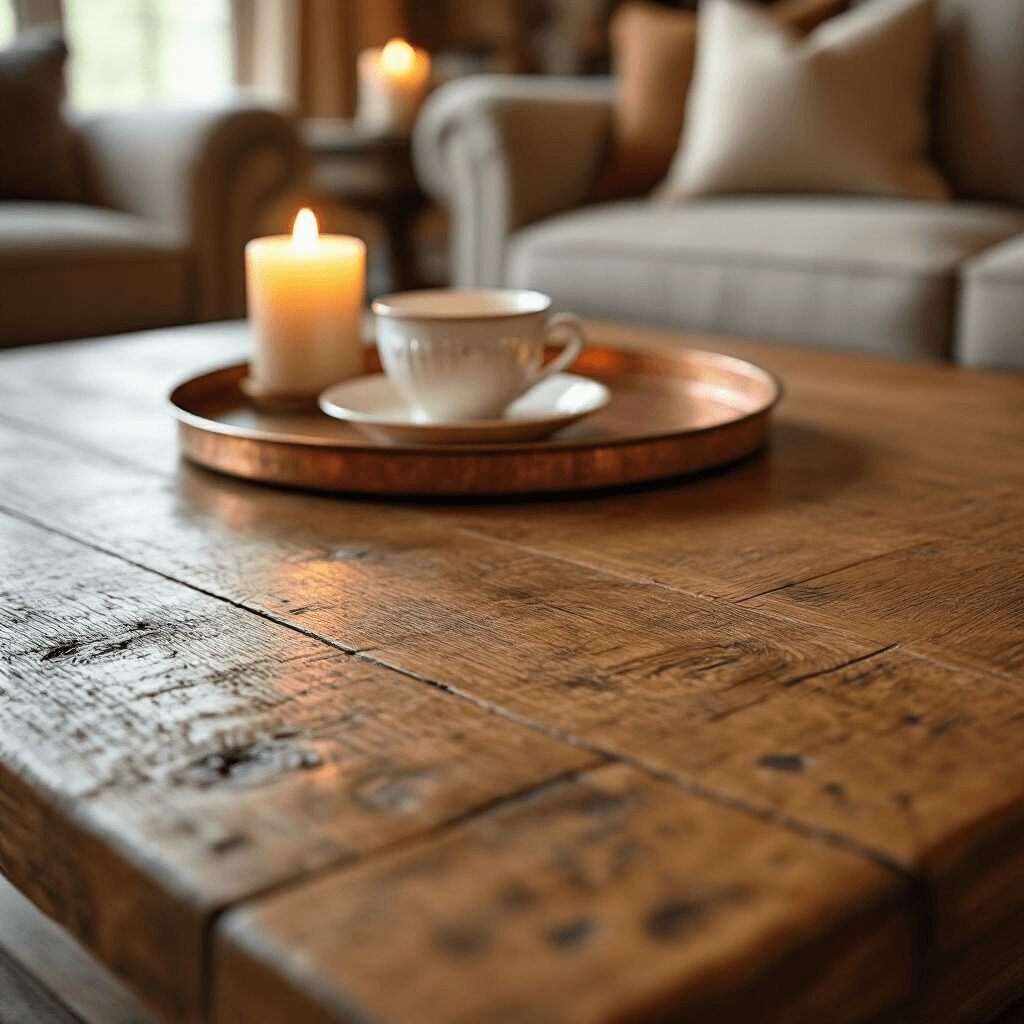
Here’s something nobody tells you about distressed finishes – they’re practically indestructible for everyday living.
Popular finish styles:
- Hand-scraped surfaces with visible tool marks
- Wire-brushed textures that highlight grain patterns
- Milk paint finishes that chip naturally over time
- Multi-step staining processes for depth and richness
Mixed Materials: Modern Meets Rustic
The best farmhouse coffee tables aren’t stuck in the past. They cleverly mix materials to feel fresh and current.
Winning combinations:
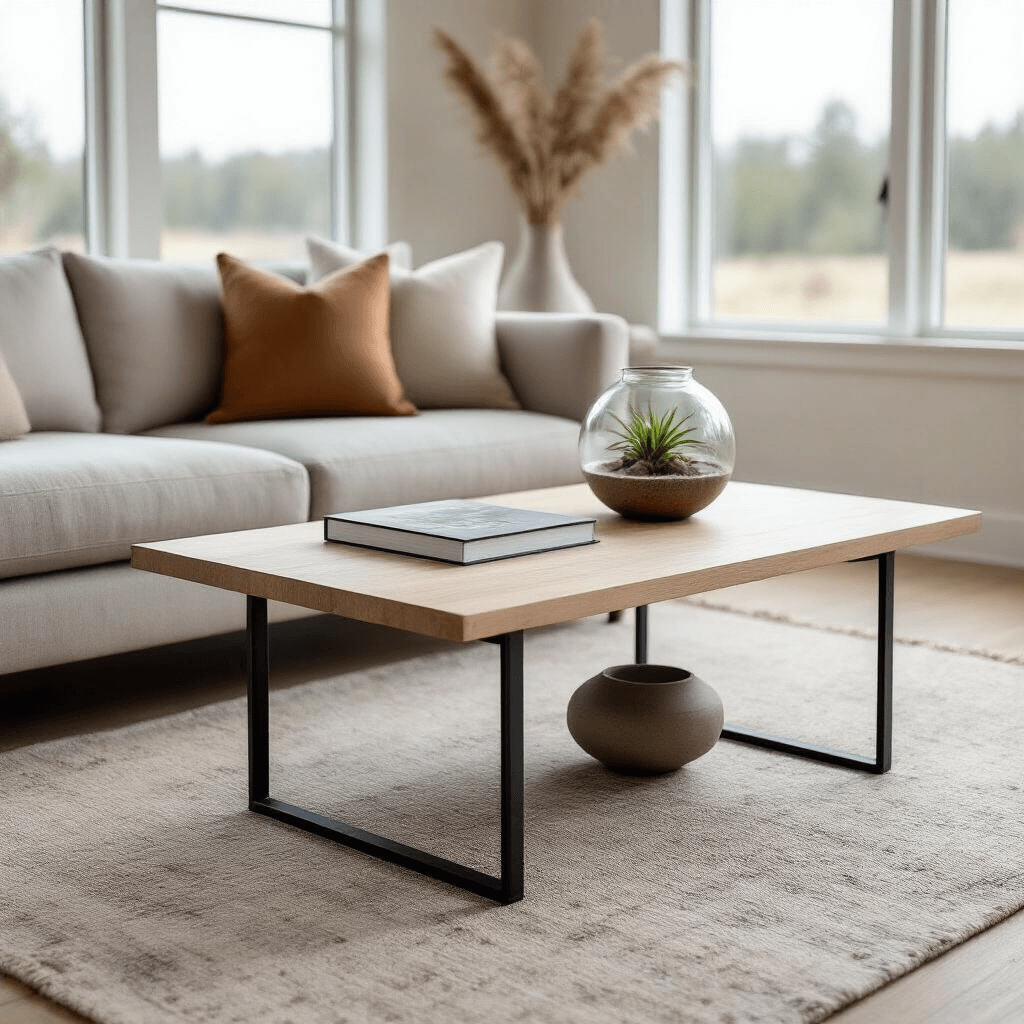
- Reclaimed wood tops with sleek metal frames
- Rough-hewn timber paired with industrial pipe legs
- Traditional joinery with contemporary hardware
- Natural wood balanced by painted accents
Size Matters: Getting the Proportions Right
This is crucial, and I see people mess it up constantly.
The golden rules:
- Table length should be about two-thirds your sofa length
- Leave 12-18 inches between sofa and table
- Height should be level with or slightly lower than seat cushions
- Allow at least 30 inches on all sides for walking
Choosing Your Wood: What Actually Matters
Different woods bring different personalities to your space.
Popular choices and their vibes:
- Oak: Classic, durable, traditional grain patterns
- Pine: Budget-friendly, takes stain beautifully, lighter weight
- Maple: Super hard, smooth finish, subtle grain
- Walnut: Rich chocolate tones, sophisticated look
- Reclaimed mixed woods: Unique character, eco-friendly story
Design Variations: Finding Your Perfect Match
Industrial Farmhouse Style:
Think thick wooden tops on black metal frames. Perfect for loft apartments or modern spaces that need warming up.
French Country Farmhouse:
More refined details like turned legs and decorative hardware. Great for traditional or cottage-style homes.
Minimalist Farmhouse:
Clean lines with subtle rustic touches. Works beautifully in Scandinavian or contemporary spaces.
Rustic Farmhouse:
Full-on barn aesthetic with heavy distressing and chunky proportions. Ideal for cabins or homes with exposed beams.
Shopping Smart: Where to Find Quality Pieces
Custom Amish Craftsmen:
The gold standard for quality, but expect to wait 3-4 months and pay premium prices. Worth every penny if you want an heirloom piece.
Local Furniture Makers:
Often more affordable than big-name custom shops. You can usually see their work in person before ordering.
Online Retailers:
Companies like farmhouse style furniture retailers offer decent quality at reasonable prices. Just read reviews carefully and understand return policies.
Thrift and Vintage Shops:
Sometimes you strike gold with authentic vintage pieces. Be prepared to refinish or repair.
DIY Options: Building Your Own Character
Building your own farmhouse coffee table isn’t rocket science. Basic woodworking skills and the right tools can create something amazing.
What you’ll need:
- Quality lumber (don’t skimp here)
- Basic woodworking tools or access to a workshop
- Finishing supplies for that perfect weathered look
- About a weekend of time
I helped my brother build his table last summer using woodworking project plans. The satisfaction of creating something with your hands is incredible.
This post may contain affiliate links. Please see my disclosure policy for details.