Why Ditch Plastic Coffee Makers Anyway?
Contents
Let me paint you a picture. You’re pouring boiling water over plastic components every single morning. That heat causes plastic to break down and release chemicals into your precious coffee.
Here’s what’s lurking in plastic coffee makers:
- BPA and phthalates that mess with your hormones
- Microplastics that end up in your cup
- Chemical odors that affect coffee taste
- Environmental waste from disposable filters
I learned this the hard way when my old plastic drip maker started giving my coffee a weird chemical aftertaste. That was my wake-up call to go plastic-free.
Manual Brewing: Your Best Bet for Zero Plastic
French Press – The Ultimate Plastic-Free Champion
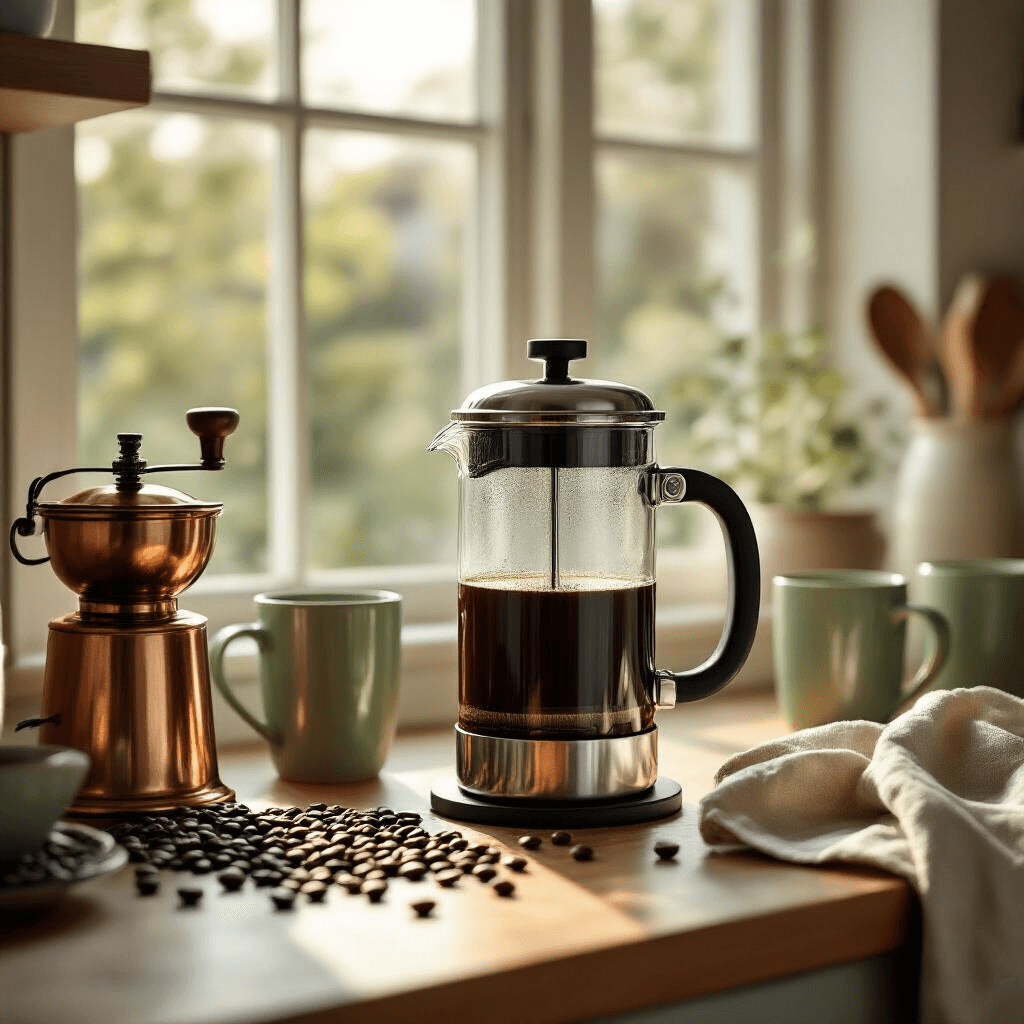
The French press is my ride-or-die for plastic-free brewing. Pure glass or stainless steel construction. No filters to waste. No electricity needed.
Why I love French press:
- Bold, thick coffee with natural oils intact
- Zero waste – just coffee grounds to compost
- Lasts forever (I’ve had mine for 8 years)
- Perfect for camping or power outages
Pro tip: Look for borosilicate glass models that won’t shatter from temperature shock.
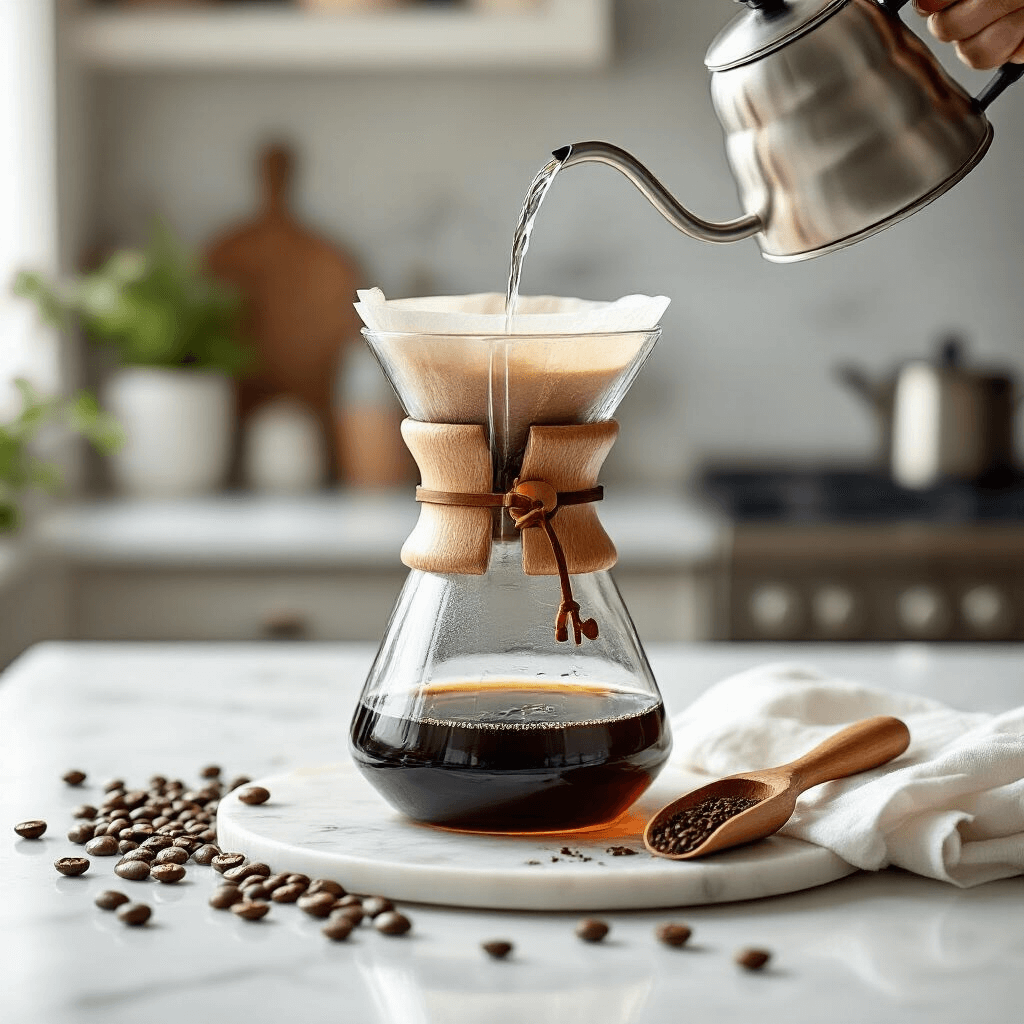
Pour-Over Magic with Chemex
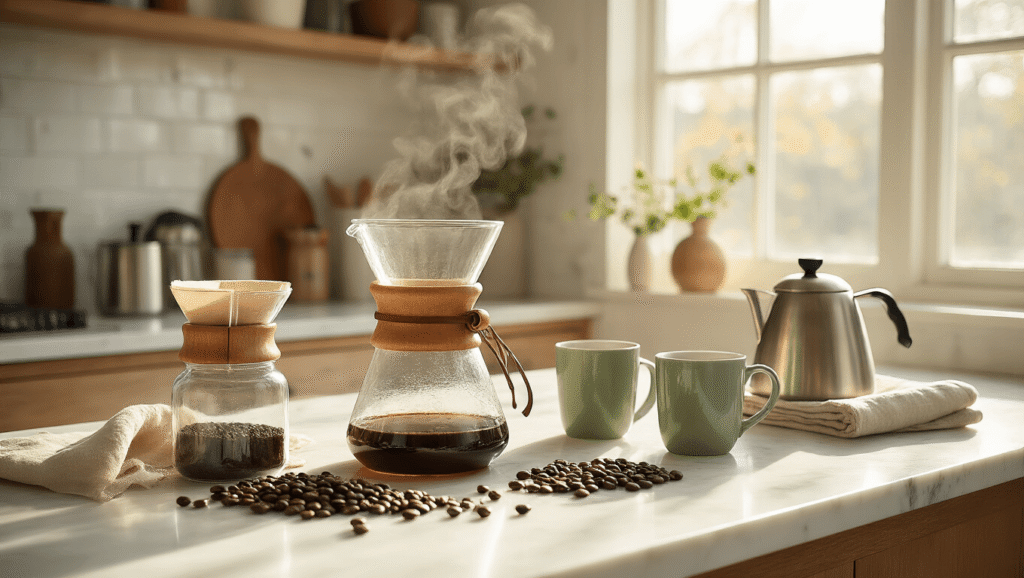
The Chemex coffee maker is pure coffee poetry. All glass construction with that iconic wooden handle. It’s like having a science experiment that produces liquid gold.
What makes Chemex special:
- Crystal-clear coffee with bright, clean flavors
- Gorgeous enough to display on your counter
- Uses biodegradable paper filters
- Zero plastic contact with your coffee
I switched to Chemex for weekend brewing, and the difference in taste clarity blew my mind.
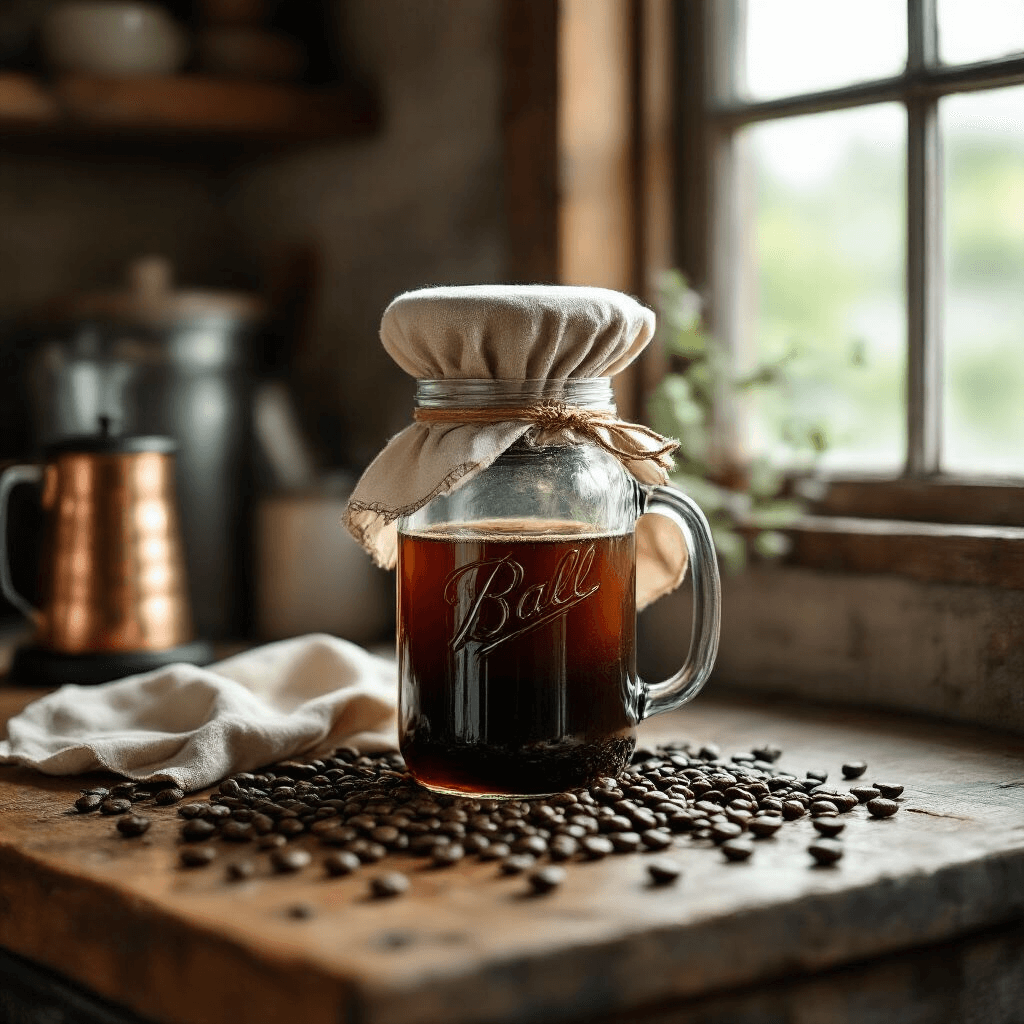
Cold Brew with Coffee Sock
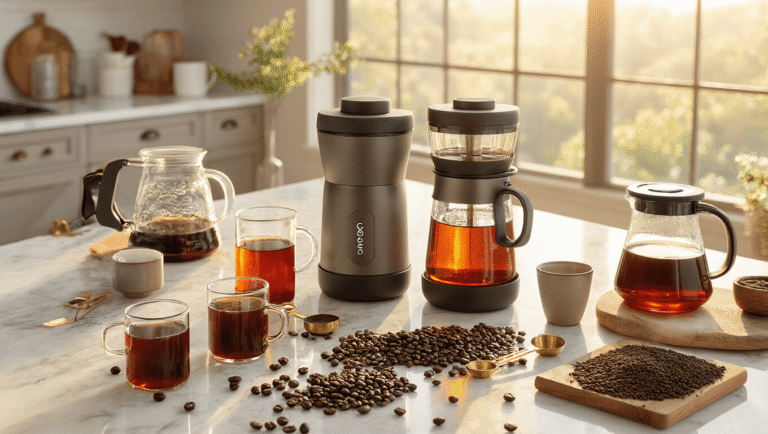
Here’s a game-changer I discovered last summer – the coffee sock filter. Organic cotton filter plus any glass jar equals perfect cold brew.
Benefits that’ll make you converts:
- Smooth, low-acid coffee that’s gentle on stomachs
- Reusable filter lasts months
- No residue or grounds in your cup
- Costs practically nothing to set up
Electric Options That Minimize Plastic
Stainless Steel Thermal Carafe Models
If you absolutely need that programmable convenience, some electric makers minimize plastic contact with your coffee.
Top stainless steel picks:
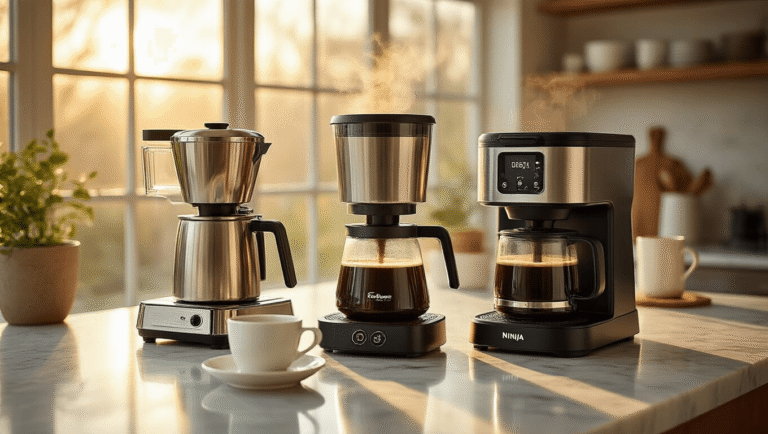
Aarke Coffee Maker
This Swedish beauty is SCA-certified with adjustable temperature control. The stainless steel coffee maker comes with either glass carafe or thermal jug options.
- Temperature range: 197°-205°F for optimal extraction
- Energy-saving auto-shutoff hot plate
- Manual brew basket adjustment
- Sleek Scandinavian design
Moccamaster by Technivorm
The thermal carafe coffee maker that’s basically the Rolls Royce of drip brewing.
- Hand-assembled in the Netherlands
- Copper heating element for stable temperature
- 5-year warranty shows they’re built to last
Reality Check: The Plastic Problem in Electric Makers
Here’s the truth bomb – even “all-stainless steel” electric coffee makers have plastic components. Internal wiring. Outer housing. Control panels.
But here’s what matters:
The plastic doesn’t touch your water or coffee grounds. That’s the key difference.
Materials That Make the Cut
Green Light Materials:
- Borosilicate glass – heat-resistant and chemically inert
- Stainless steel 304/316 – food-grade and non-reactive
- Ceramic – natural and flavor-neutral
- Organic cotton – for reusable filters
Red Flag Materials:
- Any plastic marked with recycling codes 3, 6, or 7
- Polycarbonate plastics (even if labeled BPA-free)
- Aluminum that contacts coffee directly
My Personal Plastic-Free Setup
After testing dozens of brewing methods, here’s my current rotation:
Weekday mornings: Stainless steel French press with electric kettle with temperature control
Weekend ritual: Chemex with freshly ground beans
Summer obsession: Cold brew with coffee sock in mason jars
This setup gives me variety without any plastic touching my coffee. Total game-changer for taste and peace of mind.
Making the Switch: Start Small
You don’t need to overhaul everything overnight. Start with one plastic-free method and see how you like it.
- Week 1: Try French press on weekends
- Week 2: Experiment with pour-over techniques
- Week 3: Set up cold brew for hot days
- Week 4: Evaluate which method you love most
The Bottom Line on Plastic-Free Coffee
True plastic-free coffee making is absolutely possible with manual brewing methods. Electric options can minimize plastic contact but rarely eliminate it completely.
The taste difference is real. The health benefits are worth it. Your coffee ritual becomes more mindful and intentional.
Start with a simple glass French press and quality beans. That combination alone will transform your morning coffee
This post may contain affiliate links. Please see my disclosure policy for details.