Why Your Coffee Table Looks “Off” (And Mine Did Too)
Contents
I spent two years with a coffee table that technically worked but aesthetically failed.
The problem wasn’t the table itself.
It was that I treated it like a random piece of furniture instead of the anchor point it actually is.
Your coffee table sits at eye level when you’re relaxing on your sofa.
It’s literally the first thing you see when you sit down.
When it’s wrong, everything feels wrong. When it’s right, your entire room comes together like magic.
The Material Makes the Mood (Not Just the Style)
I learned this the hard way after buying a glass coffee table that looked stunning in the store but felt cold in my warm, cozy living room.
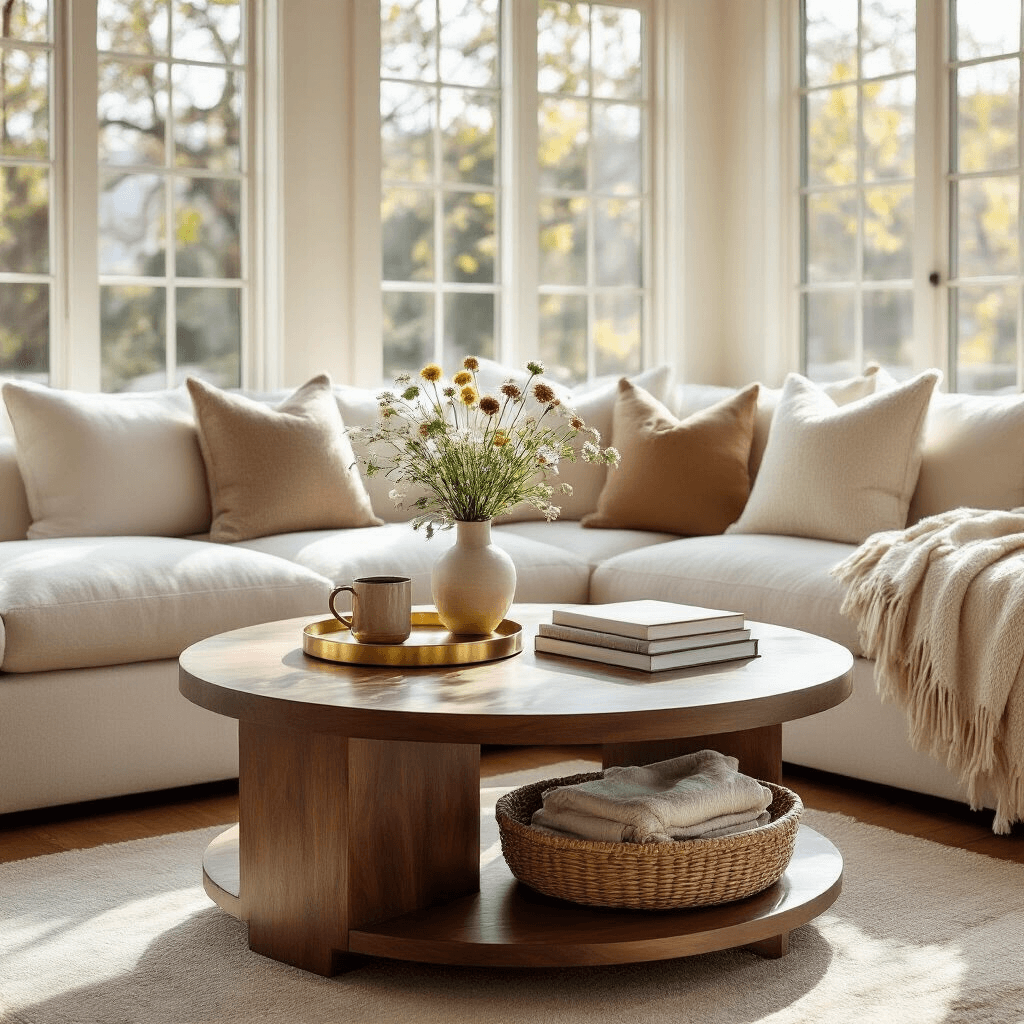
Wood brings instant warmth
Light woods like oak or ash create that breezy, Scandinavian vibe.
Dark walnut or mahogany lean traditional and sophisticated.
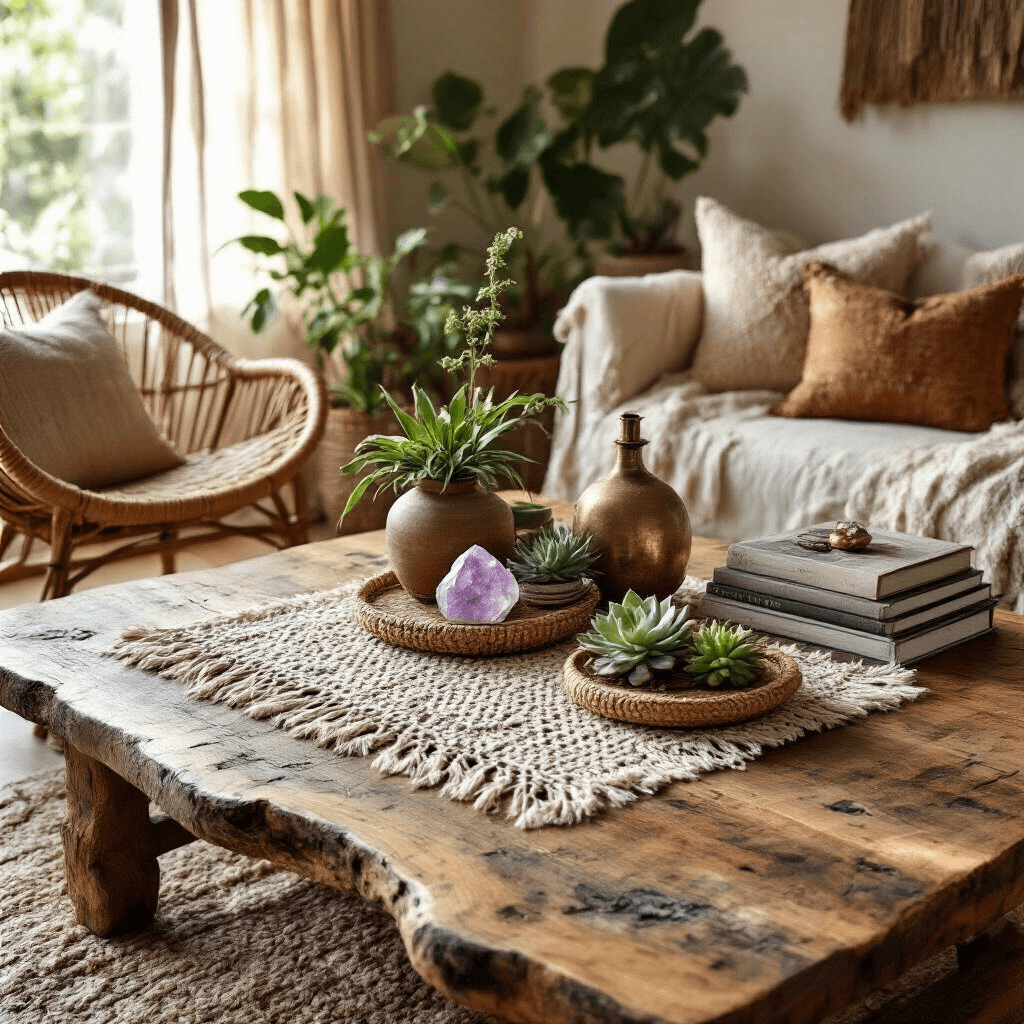
Reclaimed wood adds character and tells a story before you even style it.
Glass opens up small spaces
If your living room feels cramped, glass is your best friend.
It takes up physical space without taking up visual space.
Pair it with metal legs for industrial edge or wooden legs for mid-century charm.
Marble screams luxury
Those natural veins and swirls do the decorating work for you.
A marble coffee table becomes the room’s statement piece without you adding a single accessory.
Warning: they’re heavy as hell and show water rings like nobody’s business.
Metal and concrete for the brave
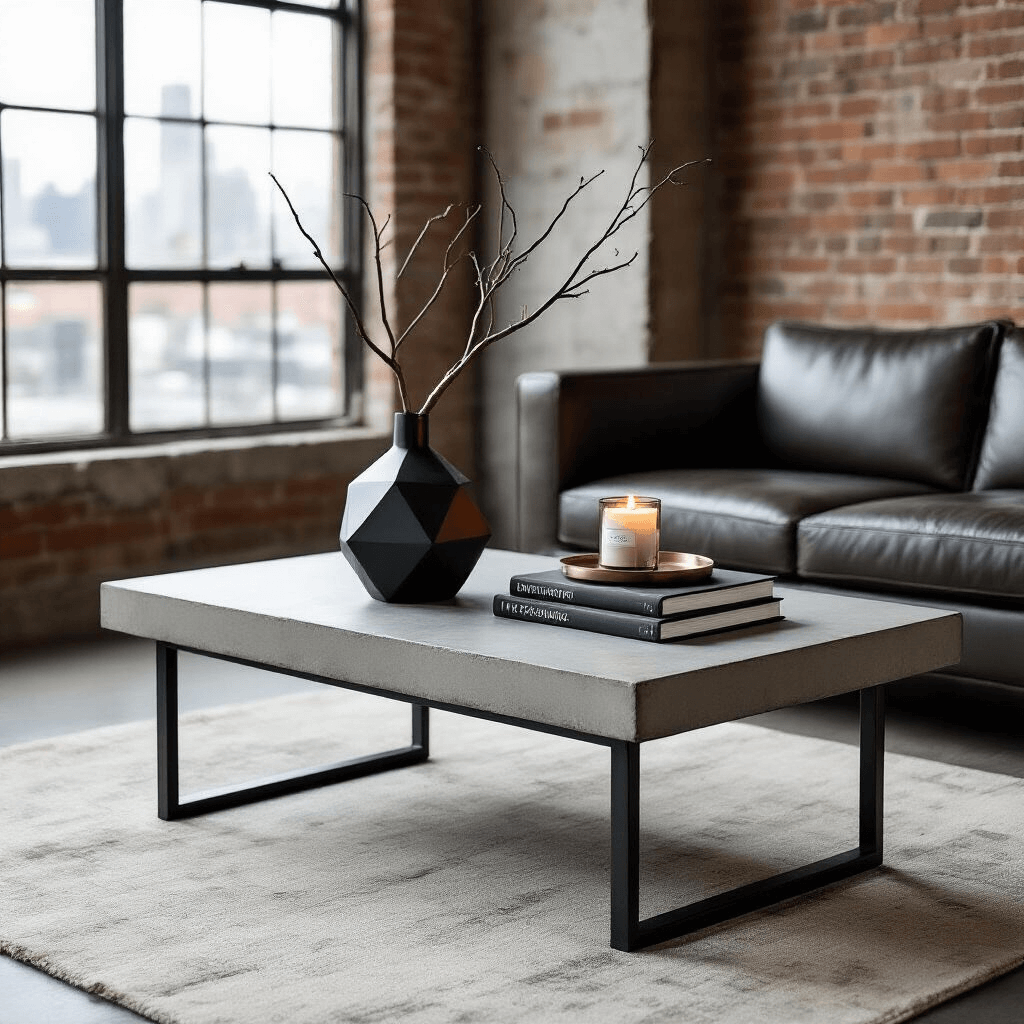
Industrial aesthetics need a metal coffee table or concrete piece.
They’re tough, they’re modern, and they make everything else in the room feel more intentional.
Shape Psychology Is Real
Round tables soften angular rooms.
I switched from rectangular to round and suddenly my boxy living room felt welcoming instead of harsh.
Round: the peacemaker
- Promotes better flow around the room
- Eliminates dangerous corners (crucial with kids)
- Balances out all those rectangular elements (TV, sofa, windows)
- Makes small spaces feel less crowded
Rectangular: the classic maximizer
- Gives you the most surface area for styling
- Fits perfectly with standard sofas
- Traditional and familiar—never goes out of style
- Best for large living rooms that can handle the visual weight
Square: the modern minimalist
- Creates symmetry that calms the eye
- Perfect for sectional sofas
- Embodies contemporary design principles
- Works beautifully in square-shaped rooms
Oval: the underrated compromise
- Combines round’s softness with rectangle’s practicality
- Unique enough to stand out
- Great conversation starter
How I Actually Style Mine (Without It Looking Forced)
I wasted years trying to recreate Pinterest images that never felt like “me.”
Then I figured out the formula that actually works.
Start with the practical stuff
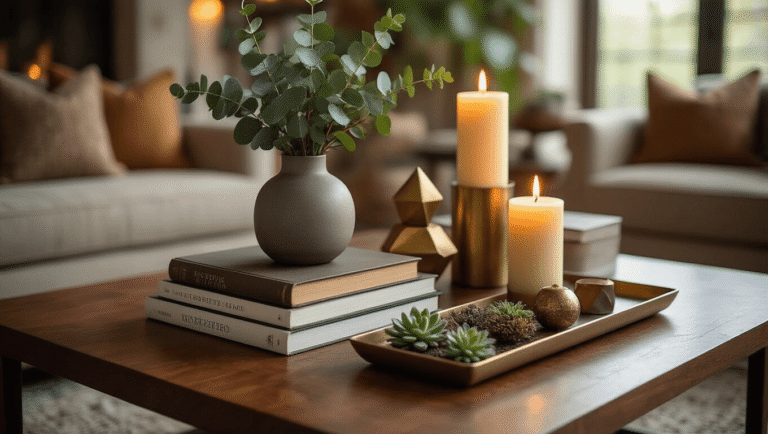
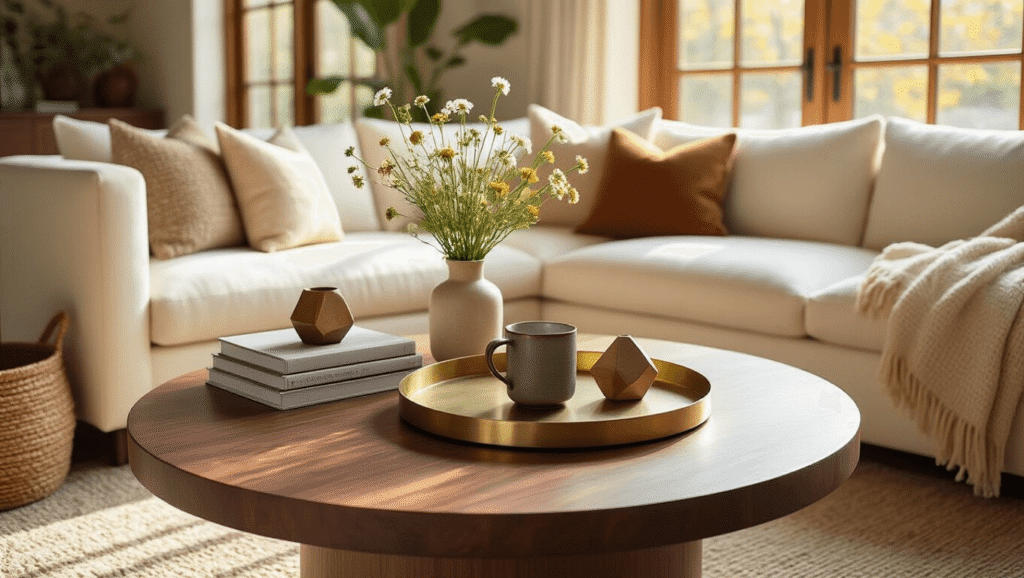
I keep a decorative tray on one end.
It corrals remotes, coasters, and daily-use items so they don’t create visual chaos.
Add one tall element
This creates vertical interest.
I use either a small vase with fresh flowers or a candle.
Height matters—aim for something 8-12 inches tall.
Stack two or three books maximum
Not five. Not a leaning tower.
Two or three coffee table books with covers that match your color scheme.
I rest a small object on top (a crystal, a wooden sphere, anything with texture).
Leave empty space
This was the game-changer for me.
Your coffee table needs breathing room.
If every square inch is decorated, it looks cluttered no matter how beautiful each individual piece is.
I keep at least 40% of my table surface completely clear.
The rule of three
Group accessories in threes—it’s visually pleasing in ways our brains just naturally like.
Three candles. Three small decorative objects. Three books.
Not four. Not two. Three.
Style Personalities That Actually Work
Minimalist aesthetic: less is absolutely more
Clean lines, neutral colors, maybe one statement piece.
A simple white or black coffee table with nothing but a single art book and a small plant.
Boho aesthetic: organized chaos
Layered textures, mixed materials, plants everywhere.
A wooden or rattan table styled with macrame coasters, succulents, crystals, and woven baskets underneath.
Industrial aesthetic: raw and intentional
Metal, wood, concrete.
Exposed hardware and utilitarian design.
Keep styling minimal—let the table’s materials be the star.
Mid-century modern: retro with purpose
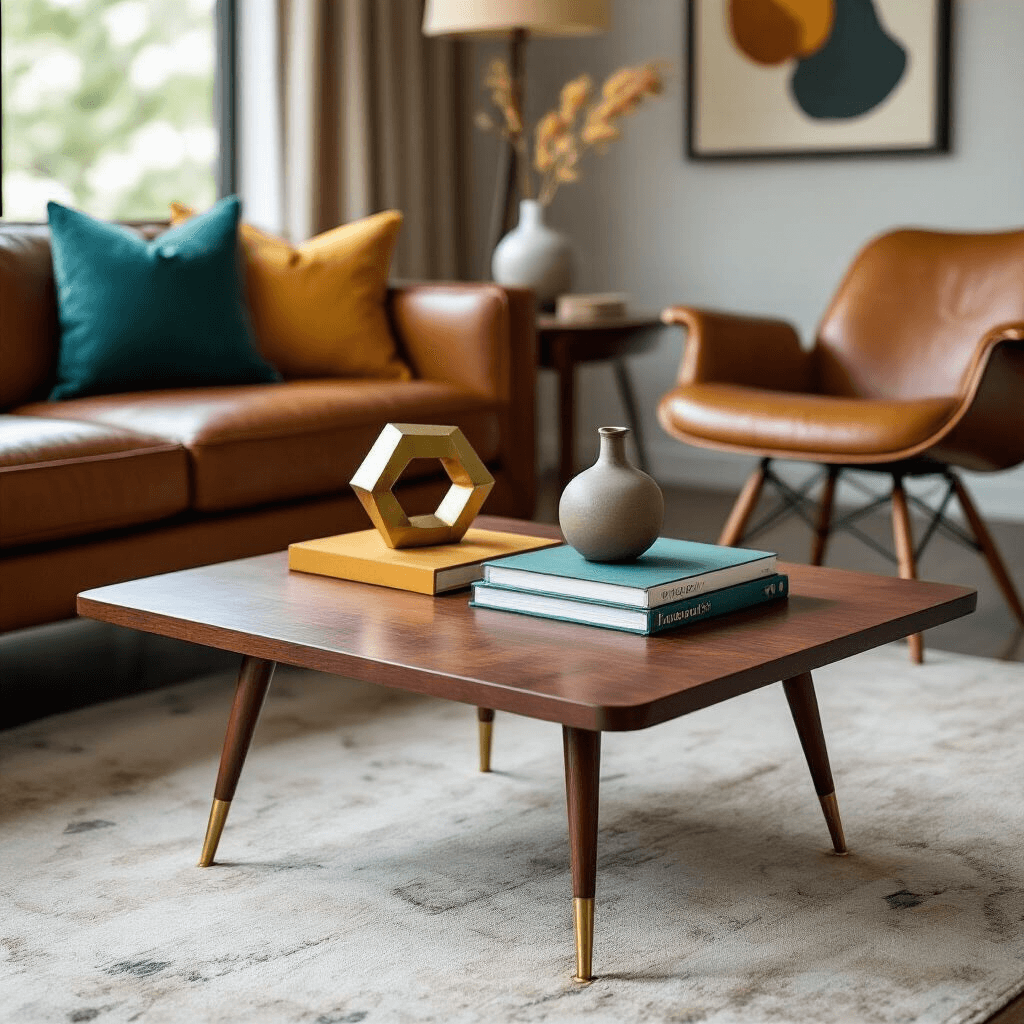
Tapered legs, organic shapes, warm woods.
Style with vintage finds, geometric objects, and mustard or teal accent colors.
Scandinavian aesthetic: cozy minimalism
Light woods, white and gray tones, functional beauty.
A light oak table with a chunky knit throw draped over one corner, white candles, and maybe a small plant.
Maximalist aesthetic: more is more
This post may contain affiliate links. Please see my disclosure policy for details.