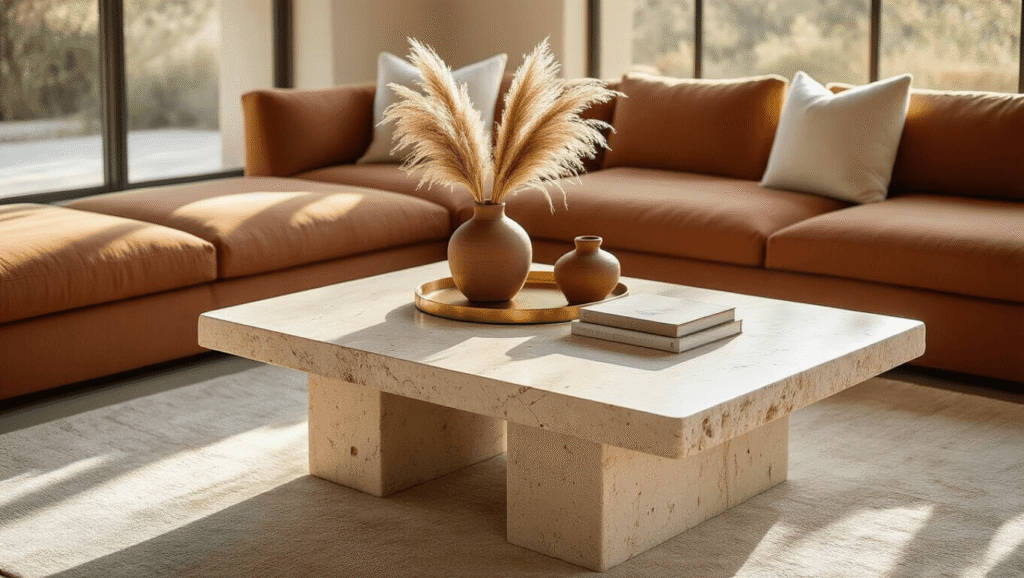
Travertine Coffee Tables: Everything You Need to Know Before You Buy
Contents
- Travertine Coffee Tables: Everything You Need to Know Before You Buy
- What Makes Travertine So Special (And Why I’m Obsessed)
- Let’s Talk Shapes (Because Size Really Does Matter)
- The Base Situation (Because Legs Matter Too)
- What You’ll Actually Pay (No BS Pricing)
- The Maintenance Talk (The Part Everyone Skips Until It’s Too Late)
- Styling Your Travertine Table (Without Trying Too Hard)
Travertine coffee tables have taken over my Instagram feed, my Pinterest boards, and honestly, half the design magazines I flip through at the dentist’s office.
And for good reason.
These stone beauties aren’t just another trend that’ll make you cringe in three years—they’re the real deal.
What Makes Travertine So Special (And Why I’m Obsessed)
I’ll be straight with you.
When I first considered getting a travertine coffee table, I thought it was just fancy Instagram nonsense.
Then I actually touched one in a showroom.
The cool, smooth surface. The natural variations in color. The way it catches light differently throughout the day.
I was sold.
Here’s what makes travertine worth the hype:
- Every single piece is completely unique (nature doesn’t do cookie-cutter)
- The neutral tones work with literally everything
- It’s actually durable when you treat it right
- Those natural veins and pits? They’re features, not flaws
- It gets better looking as it ages (unlike my attempts at bangs)
The stone comes in warm creams, soft tans, and subtle grays that somehow manage to be interesting without screaming for attention.
Let’s Talk Shapes (Because Size Really Does Matter)
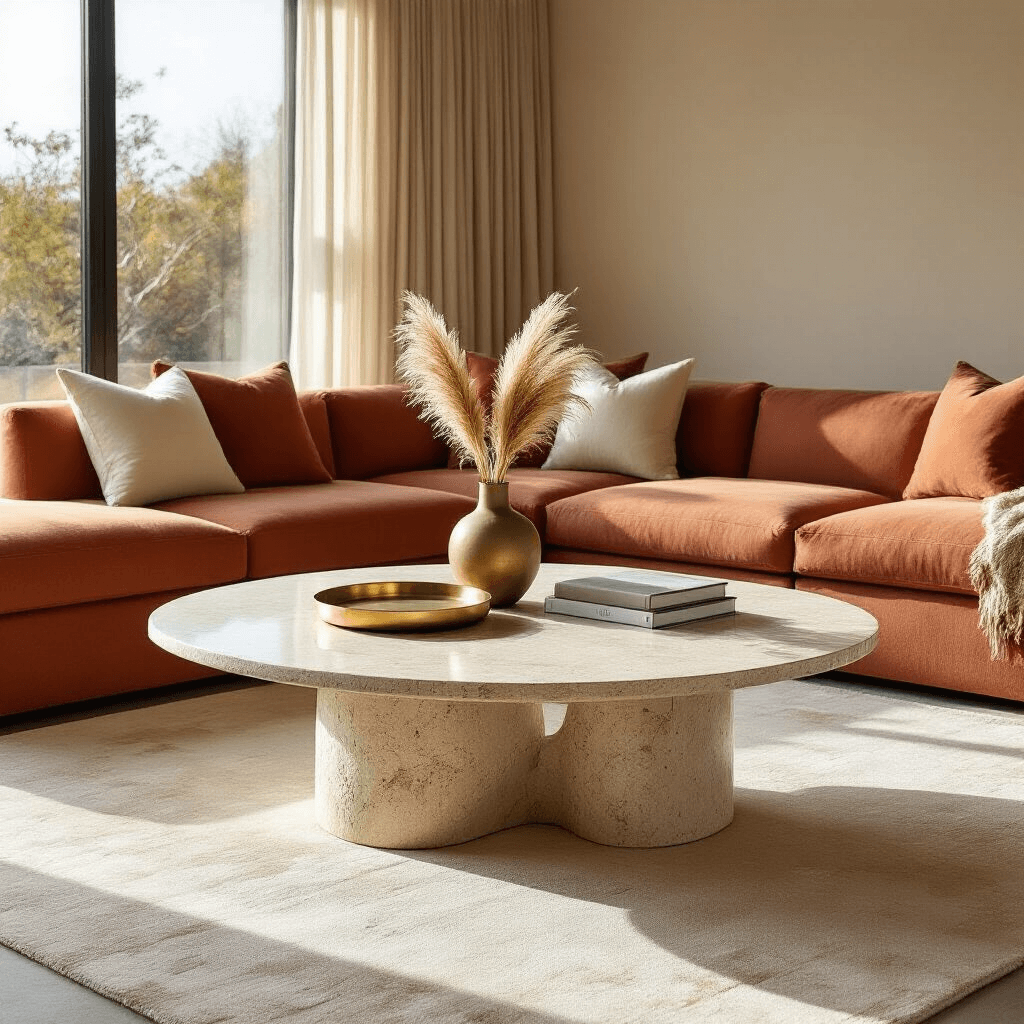
Round Tables: The Peacekeeper
Round travertine tables are my go-to recommendation for families with tiny humans who haven’t mastered spatial awareness yet.
No sharp corners to worry about. Easy flow around the room. Perfect for encouraging conversation (everyone can see everyone).
A round travertine coffee table works beautifully in smaller spaces too—the curved edges trick your eye into thinking you have more room than you actually do.
Rectangular: The Classic Overachiever
If you’ve got a long sofa or a sectional, rectangular is your friend.
These bad boys make a statement. They’re architectural. They mean business.
I’ve seen them range from cozy 40-inch versions perfect for apartments to massive 76-inch showstoppers that anchor entire great rooms.
The clean lines look especially sharp in modern or minimalist spaces.
Oval: The Underrated Hero
Oval gets overlooked, and I’ll never understand why.
You get the surface area of a rectangle with the flow of a round table. It’s the mullet of furniture—business in the front, party in the back (except actually stylish).
The Base Situation (Because Legs Matter Too)
The base can make or break your table’s vibe.
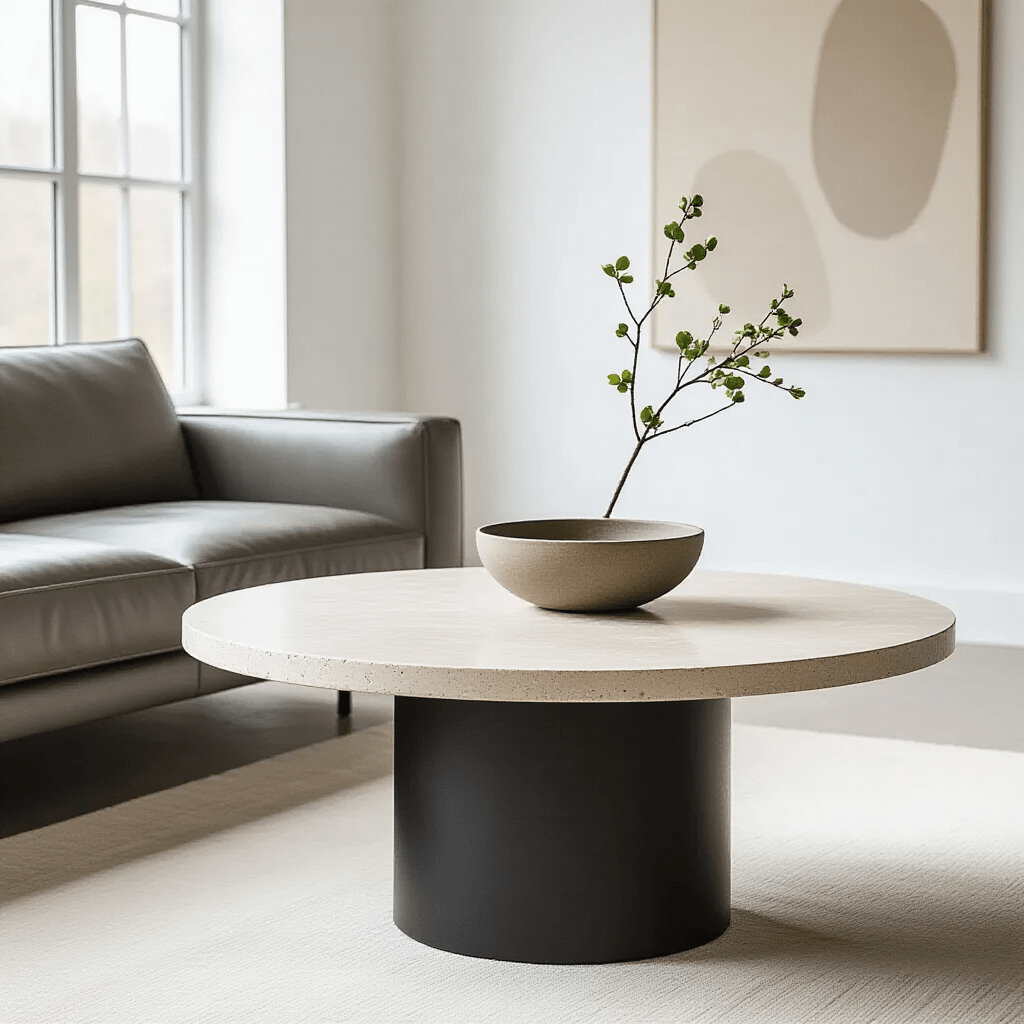
Pedestal bases create that sculptural, gallery-feel look. Four-leg designs offer stability and a more traditional aesthetic. Geometric bases add architectural interest and modern edge. Wood bases soften the stone’s formality with organic warmth.
I’ve seen stunning travertine side tables with brass-finished legs that absolutely nail the 70s-modern revival look.
You can also find bases in:
- Matte black powder coat
- Brushed aluminum
- Natural ash wood
- Lacquered colors (cream, burgundy, forest green)
What You’ll Actually Pay (No BS Pricing)
Let me break down the real numbers I’ve seen shopping around:
Budget-Friendly Range: $800-$1,500 You’re looking at smaller pieces, possibly laminate or composite travertine, or simple designs from mass retailers.
Mid-Range Sweet Spot: $1,500-$3,000 This is where you find solid travertine pieces with good construction and interesting designs. Most people shopping for quality land here.
Investment Territory: $3,000-$6,000+ Handcrafted pieces, larger sizes, artisan makers, fair-trade certified, unique shapes, or luxury brand names.
I’m not going to tell you which range is “right.”
A $1,200 table you love beats a $4,000 table you bought because some influencer said it was “essential.”
The Maintenance Talk (The Part Everyone Skips Until It’s Too Late)
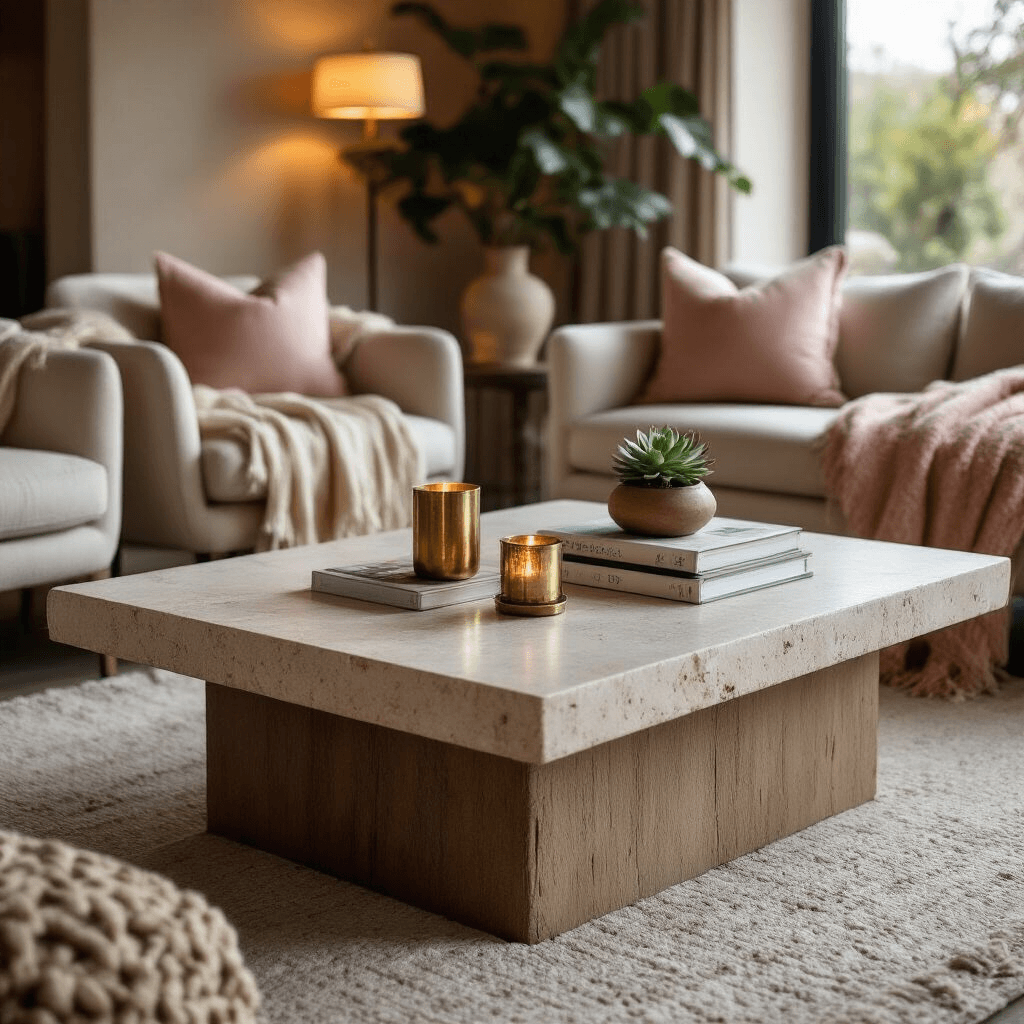
Real talk: travertine is porous stone.
It’s not granite. It’s not quartz. It needs some actual care.
Daily Habits That Save Your Sanity
Use coasters. Always. Coffee, wine, your fancy cocktails—they all leave marks if you let them sit.
Wipe spills immediately. Don’t let your brain say “I’ll get it later.” Later is too late.
Invest in stone coasters. Felt-backed ones are even better—they protect the stone from scratches.
Weekly Care Routine
I clean mine with warm water and a soft microfiber cloth.
That’s it.
No fancy products. No harsh chemicals. Definitely no bleach (I learned this the hard way—don’t be me).
For stubborn marks, I use a pH-neutral stone cleaner maybe once a month.
The Sealing Debate
Some people swear by sealing their travertine every six months. Others never seal and embrace the patina.
I’m in the sealing camp, but I use a penetrating sealer that doesn’t change the stone’s appearance.
It gives me peace of mind when my friends inevitably ignore my coaster pleas.
You can find stone sealers that specifically work for travertine—just avoid anything that leaves a glossy finish unless that’s your jam.
Styling Your Travertine Table (Without Trying Too Hard)
The beauty of travertine is that it doesn’t need much help.
My go-to formula:
Something organic (fresh flowers, a plant, driftwood) Something functional (a decorative tray to corral remotes) Something personal (an interesting book, a small sculpture) Something that grounds it (a textured bowl, a chunky candle)
For Minimalists
One beautiful object. Maybe two. Done.
The stone does the talking.
For Maximalists
This post may contain affiliate links. Please see my disclosure policy for details.
This post may contain affiliate links. Please see my disclosure policy for details.